Drawing on IIE Research and the Experiences of Higher Education Partners, Expert Panelists from IIE, AIFS, and Towson University Offer Evidence-Based Recommendations for Designing and Scaling Up Global Internships
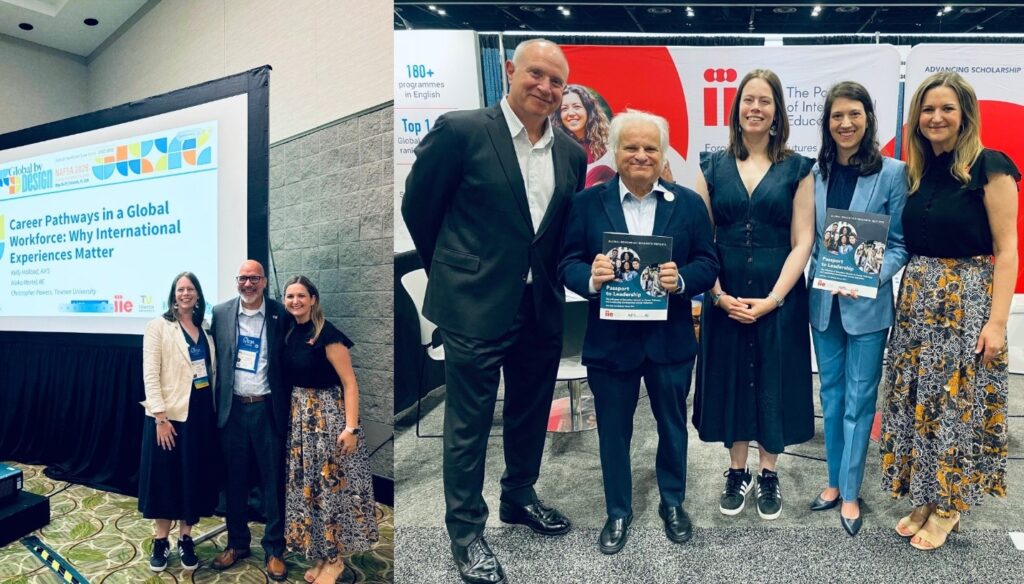
As higher education institutions seek new ways to prepare students for an increasingly global workforce, IIE continues to develop research and convene experts to identify what works. At the NAFSA Annual Conference & Expo in May, IIE teamed with the American Institute for Foreign Study (AIFS) and Towson University to lead an interactive discussion, Career Pathways in a Global Workforce: Why International Experiences Matter.
The session examined data-backed connections between global internships and workforce outcomes and offered practical, scalable strategies for institutions seeking to align international experiences with career pathways. Expert panelists included:
- Mirka Martel, Ph.D.,Head of Research, Evaluation & Learning, Institute of International Education (IIE)
- Kelly Holland, Vice President, Strategic Communications & Engagement, American Institute for Foreign Study (AIFS)
- Christopher Powers, Assistant Vice President for International Initiatives, Towson University
What IIE Data Says About Global Internships and Skills Development
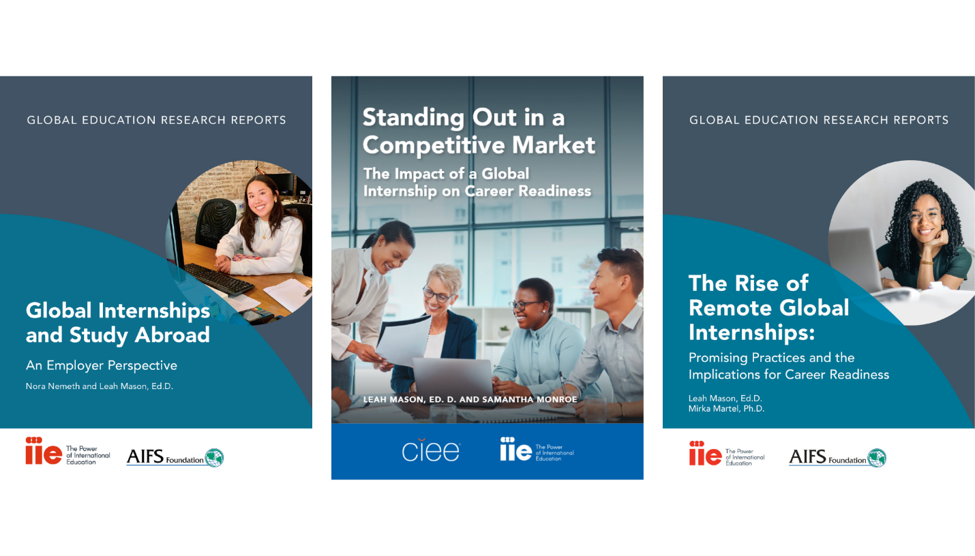
Drawing on IIE’s recent study, Standing Out in a Competitive Market: The Impact of a Global Internship on Career Readiness, Martel shared three key findings:
- Global internships significantly strengthen competencies critical to success in today’s workforce, including confidence, communication, flexibility, and adaptability.
- 80% of alumni respondents reported that their international internship supported their career pathways, and 85% highlighted these experiences on their résumés—demonstrating clear alignment with employability outcomes.
- 86% of respondents said their global internship influenced their career goals, helping them to clarify professional direction and make more targeted career decisions.
As part of the Global Education Research Reports series, IIE and AIFS continue to advance the evidence base for this work through publications such as:
- The Rise of Remote Global Internships: Promising Practices and the Implications for Career Readiness,
- Passport to Leadership: The Influence of Education Abroad on Career Pathways and Leadership Development Across Industries and
- Global Internships and Study Abroad: An Employer Perspective, in which more than 70% of employers indicated they would hire their international interns full-time if possible.
Defining Quality and Impact in Global Internships
A key theme throughout the session was the need for institutions to define and measure what makes a global internship effective, not just in terms of participation, but in terms of career outcomes and measurable employability gains.
Panelists emphasized that successful models prioritize:
- intentional learning outcomes tied to recognized frameworks, such as the National Association of Colleges and Employers’ (NACE) Career Competencies,
- structured reflection practices that help students translate experience into marketable skills, and
- clear alignment with employer expectations to ensure relevance and value.
Holland emphasized that quality is driven by program design. Institutions that integrate reflection, mentorship, and assessment are better positioned to demonstrate tangible employability outcomes to both students and employers.
Building Sustainable, Cross-Functional Programs
For many institutions, one of the most persistent challenges is organizational alignment. Powers shared examples to illustrate how cross-functional collaboration enhances both program quality and scalability at Towson University. Cross-functional collaboration strengthens both program quality and career alignment by ensuring internships meet academic requirements and workforce expectations simultaneously.
Recommended strategies include:
- Facilitate ongoing dialogue across campus stakeholders—such as academic departments, career centers, and study abroad offices—to align goals, resources, and networks
- Establish consistent feedback mechanisms to refine and improve program outcomes
- Embed employability frameworks into the program design and student reflections
This integrated approach helps to break down silos and ensures that global internships are embedded within broader institutional strategies, said Holland.
Scaling Programs Strategically
While interest in global internships continues to grow, many institutions remain in early stages of development. The panelists suggest that scale should be approached incrementally, with a focus on career relevance, sustainable impact, and alignment rather than rapid expansion.
Martel, Holland, and Powers offered several strategies for institutions looking to build or expand programs:
- Start with a focused pilot, ideally in a high-demand discipline(s)
- Leverage existing international partnerships or experienced providers to manage logistics
- Integrate internships into academic structures such as credit-bearing courses
- Engage faculty champions to drive adoption and credibility
The panelists stressed the importance of selecting the right entry point—such as a receptive academic unit or a high-demand discipline—which can create early momentum and support long-term growth.
A Strategic Opportunity for Higher Education
Global internships can serve as a powerful mechanism to connect workforce needs to higher education. When designed intentionally and supported through cross-campus collaboration, these programs deliver measurable benefits such as enhancing student employability, strengthening employer partnerships, and advancing institutional goals.
IIE in Full Force
The panel session was among the more than 20 sessions and one pre-conference workshop led by 17 IIE team members at the 2026 NAFSA Annual Conference. IIE team members covered topics such as partnerships, career readiness, and regional strategies for student recruitment. IIE’s Research, Evaluation, and Learning unit continues to shape the field through its publications; they released the latest Open Doors data on Intensive English Programs and Passport to Leadership. IIE also celebrated a major milestone and partnership, hosting receptions for the Fulbright Program’s 80th Anniversary and the Korea – U.S. Special Exchange Program for STEM Students (KORUS).