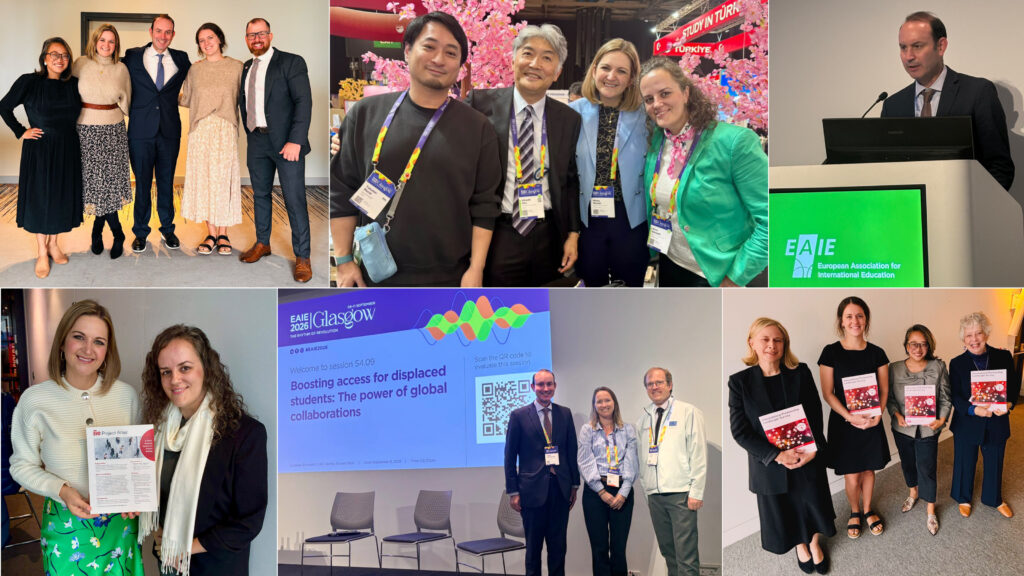
The future of international education will be shaped by strong partnerships, reliable data, and cross-border collaboration—key themes at the 2026 European Association for International Education’s Annual Conference in Glasgow. IIE experts joined global colleagues to share research, exchange ideas, and explore opportunities to advance higher education.
Throughout the week, IIE contributed to conversations on student mobility, partnerships, transatlantic cooperation, and support for the global higher education community.
Key Themes
- Partnerships are now strategic imperatives. Institutions increasingly view global partnerships as essential to advancing research, innovation, student success, and institutional resilience.
- Collaboration remains strong amid uncertainty. Despite geopolitical and economic challenges, universities remain committed to international engagement and cross-border cooperation. Learn how IIE’s Center for International Partnerships helps institutions optimize their global affairs.
- Transatlantic relationships remain a mainstay of international cooperation. European and North American institutions are seeking new ways to collaborate on shared priorities and global challenges.
- Support for displaced students and scholars is growing. Institutions are expanding efforts to create pathways and opportunities—including the IIE Odyssey Scholarship and IIE Scholar Rescue Fund—for those affected by conflict and crisis.
- The global higher education community remains resilient and optimistic. EAIE demonstrated a shared commitment to expanding opportunity, fostering understanding, and advancing international education’s role in addressing global challenges.
Building a Clearer Picture of Global Student Mobility
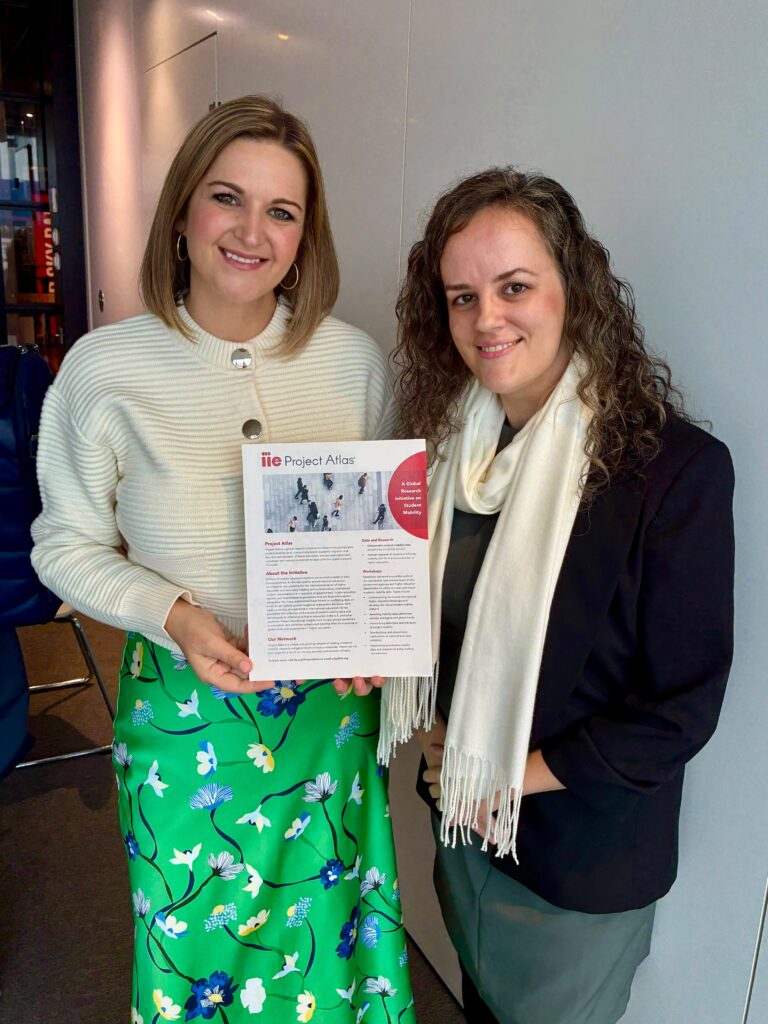
Approximately seven million students now pursue higher education outside their home countries, yet the global picture of student mobility remains incomplete. Through Project Atlas®, IIE works with partners to strengthen comparable mobility data.
IIE’s Research, Evaluation, and Learning experts Mirka Martel and Nora Nemeth convened the Project Atlas network and met with national agencies from Canada, Europe, Japan, and the United Kingdom to discuss trends, data practices, and collaboration.
Three themes emerged: collaboration is essential because no single country or organization can fully capture global mobility trends; local and regional perspectives provide critical context; and reliable, comparable data helps institutions and governments respond to changing student needs.
New Research Reveals How International Partnerships Are Evolving
A major highlight was the release of Phase 1 findings from the International Partnership Landscape Survey (IPLS), led by IIE’s Center for International Partnerships. The study examines how institutions build, manage, and sustain international partnerships worldwide.
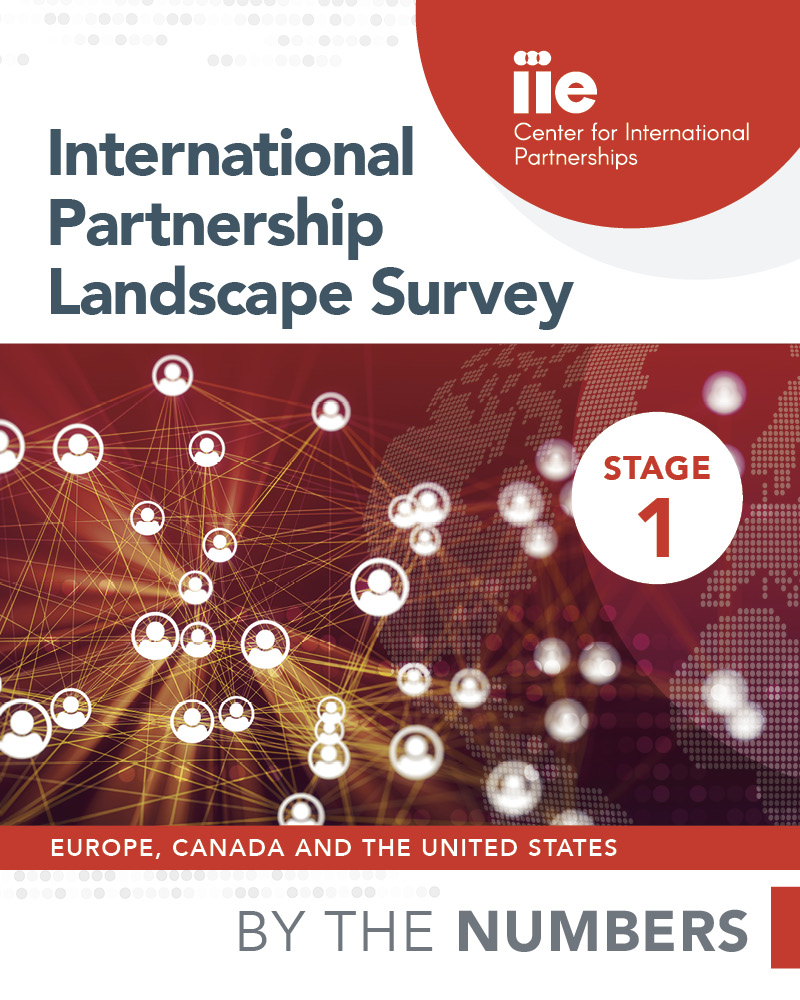
CIP Director Sylvia Jons presented the initial findings—covering Canada, Europe, and the United States—show an increasingly strategic, institution-wide partnership landscape: 96% of surveyed institutions said senior leaders view international partnerships as important or very important; 84% reported significant changes over the last decade; 80% maintain a centralized database or master list; and more than half reported at least one partnership in every world region.
The findings also show partnerships expanding beyond student exchange to include research collaboration, faculty engagement, virtual learning, workforce development, and broader institutional goals. Jons and Cori Crisfield, CIP Manager, also engaged with IPLS advisory council members and representatives of universities in the Global Engineering Exchange (Global E3) Consortium.
Strengthening Transatlantic Partnerships for the Future
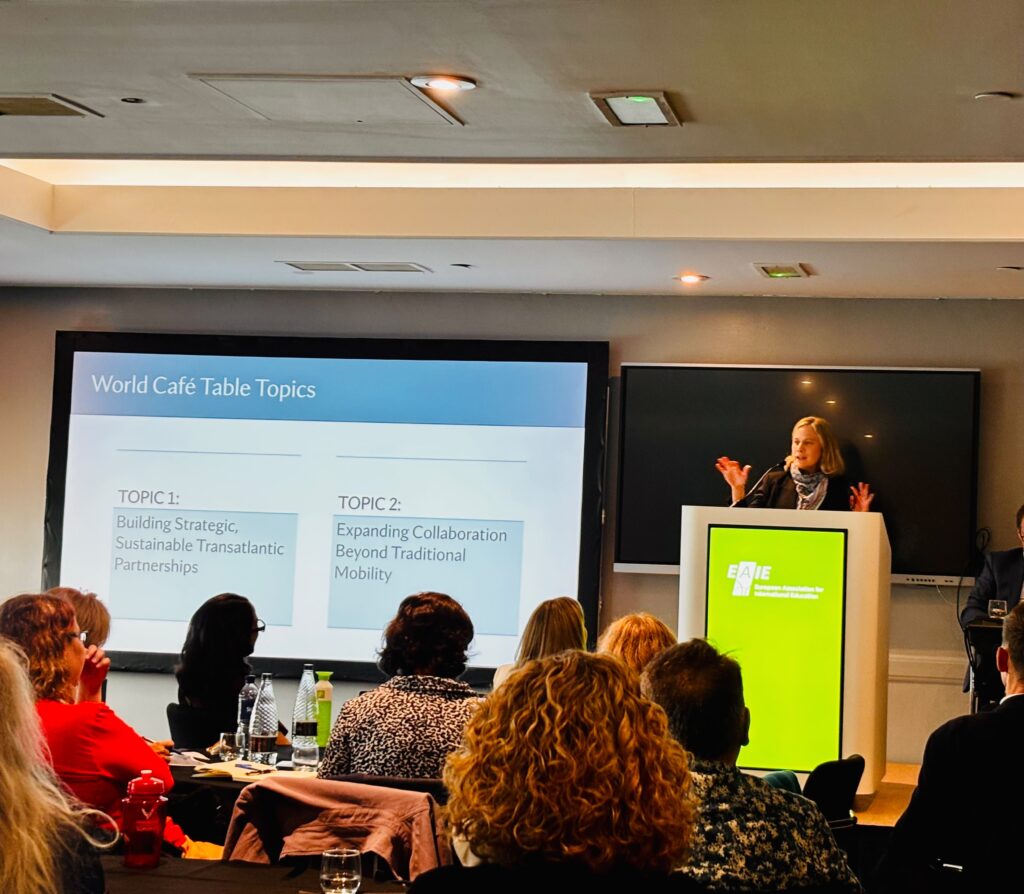
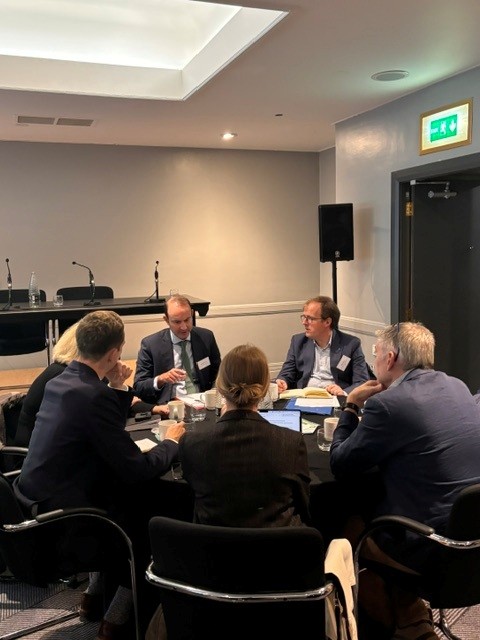
IIE’s Senior Director of European Affairs, Kari Kuja, co-organized the workshop, Shaping Transatlantic Futures: Priorities, Partnerships, and Perspectives, with DAAD, EAIE, and AIEA. More than 50 higher education leaders from Europe, Canada, and the United States discussed how to build stronger, more sustainable transatlantic partnerships.
Drawing on the IIE-DAAD report, Transatlantic Mobility in Higher Education and Research: A Cornerstone of Transatlantic Relations, participants focused on practical strategies for collaboration in a complex global environment.
Priorities included moving beyond MOUs to partnerships with clear goals and measurable outcomes at the outset; developing sustainable funding approaches based on mutual value; and exploring regional networks, state-level collaborations, and multi-institutional alliances.
Attendees all agreed that transatlantic partnerships remain vital to talent development, research excellence, innovation, economic growth, and shared problem-solving.
Supporting Displaced Students and Scholars
Europe hosts an estimated 12 million displaced persons, according to UNHCR. IIE EVP Jonah Kokodyniak joined Marianne Knarud of the University of Oslo and Michael Hörig of DAAD to explore new, sustainable models of collaboration to support displaced students and ease pressures on host countries. Kokodyniak explained how IIE leverages its international networks to connect displaced students and scholars with safe haven institutions. In addition, Laura Oleson, program officer for IIE’s Scholar Rescue Fund, engaged with regional partners, who hosted 35% of IIE-SRF fellows in 2025.
Looking Ahead: Explore Opportunities to Partner with IIE
International education is strongest when institutions work together, share knowledge, and make evidence-based decisions. Through global mobility research, strategic partnership development, transatlantic collaboration, and program design, IIE helps organizations navigate an increasingly connected world.
IIE works with universities, governments, foundations, corporations, and nonprofit organizations around the world to create customized solutions that advance education, research, workforce development, and international engagement.
IIE looks forward to continuing the conversations that began at EAIE 2026 and advancing international education through partnership, innovation, and shared purpose.