IIE Connects Campuses Worldwide and Helps Countries Meet Global Talent Demand
Many countries increasingly view academic and professional exchanges as core to building skills, fostering innovation, and expanding their global influence. Educational exchange has been instrumental for governments seeking to foster bilateral cooperation, promote talent development, and raise economic competitiveness. These international education initiatives cultivate leaders while also contributing to long‑term national development, advancement across STEM fields, and other national priorities.
With targeted funding and in close cooperation, universities and governments can achieve multiple goals, including: 1) attracting high‑achieving students, particularly STEM, business, and language majors; 2) sending students to the United States to gain skills that contribute to national priorities; and 3) strengthening research collaboration and industry ties. The Institute of International Education (IIE) specializes in partnering with public and private sector organizations to design programs that advance these priorities, drawing on more than a century of expertise in scholarship program administration, a deep network of university connections around the world, and evidence‑based best practices. In addition to our long-standing work with premier international exchange programs such as Fulbright, we have partnered with esteemed global universities such as King Abdullah University of Science and Technology (KAUST) and NYU Abu Dhabi.
National Priorities and Student Demand in STEM Fields
Given the strong demand for STEM skills in today’s economy, it is important to understand the landscape of STEM education globally and within the United States.
There are an estimated 7 million globally mobile students worldwide pursuing higher education—a number that has nearly doubled over the last two decades. STEM disciplines now dominate global student mobility (Project Atlas, 2025), with a strong demand for STEM degrees as well as study or intern abroad programs that prepare students for the future of work.
U.S. institutions are responding to this demand according to the 2025 Open Doors Report on International Educational Exchange. More than half of international students come to the U.S. for its world-class STEM degree programs. And more than one‑quarter of Americans studying abroad are STEM majors, including engineering (6%), health professions (6%), math or computer science (4%), and physical or life sciences (8%). This alignment creates a strong opening for governments seeking to advance workforce development, innovation ecosystems, and public–private collaboration through targeted mobility programs that feed into these objectives.
How IIE Partners with Governments Worldwide
For governments interested in expanding educational exchange with the United States, IIE is a go-to partner for designing, implementing, and scaling education partnerships that deliver measurable outcomes.
Facilitating Strategic Partnerships
Through a structured curriculum, best-fit matching, and facilitated dialogues, IIE’s Center for International Partnerships connects U.S. and international institutions around defined national priorities such as digital transformation, advanced manufacturing, and health innovation.
Recent initiatives have involved R1 and regional public research universities, specialized technical colleges, community colleges, and private institutions, including:
- Thailand: 16 Thai and 11 U.S. universities are exploring agreements focused on STEM education and the digital economy, engaging public and private U.S. universities.
- Vietnam: 31 Vietnamese and 21 U.S. universities collaborated on engineering and semiconductor workforce development.
- India: Five Indian and 17 U.S. universities explored branch campuses, edtech, and industry-aligned higher education partnerships.
- Saudi Arabia: 80 Saudi and U.S. institutions participated in the inaugural Saudi-U.S. Higher Education Partnerships Forum to explore and strengthen educational collaboration.
Engineering and Experiential Learning
Study abroad among American engineering students has increased fivefold in 30 years, supported in part by IIE’s Global Engineering Education Exchange (Global E3) Consortium, which facilitates academic exchanges for engineering students between participating universities. Global E3 now includes nearly 70 top engineering schools across 69 countries.
IIE also delivers experiential learning programs that connect mobility to careers. Through initiatives like the Korea‑U.S. Special Exchange Program for STEM (KORUS), students gain direct exposure to research hubs, technology firms, and innovation ecosystems, strengthening long‑term talent and bilateral industry and research links.
Data-Driven Insights
IIE’s Research, Evaluation and Learning Unit offers a suite of services and products, including survey design, administration, and analysis; custom data; white papers and policy briefs; reports; and program evaluations. These evidence‑based insights enable governments to develop strategic engagement with U.S. institutions and strengthen national talent pipelines.
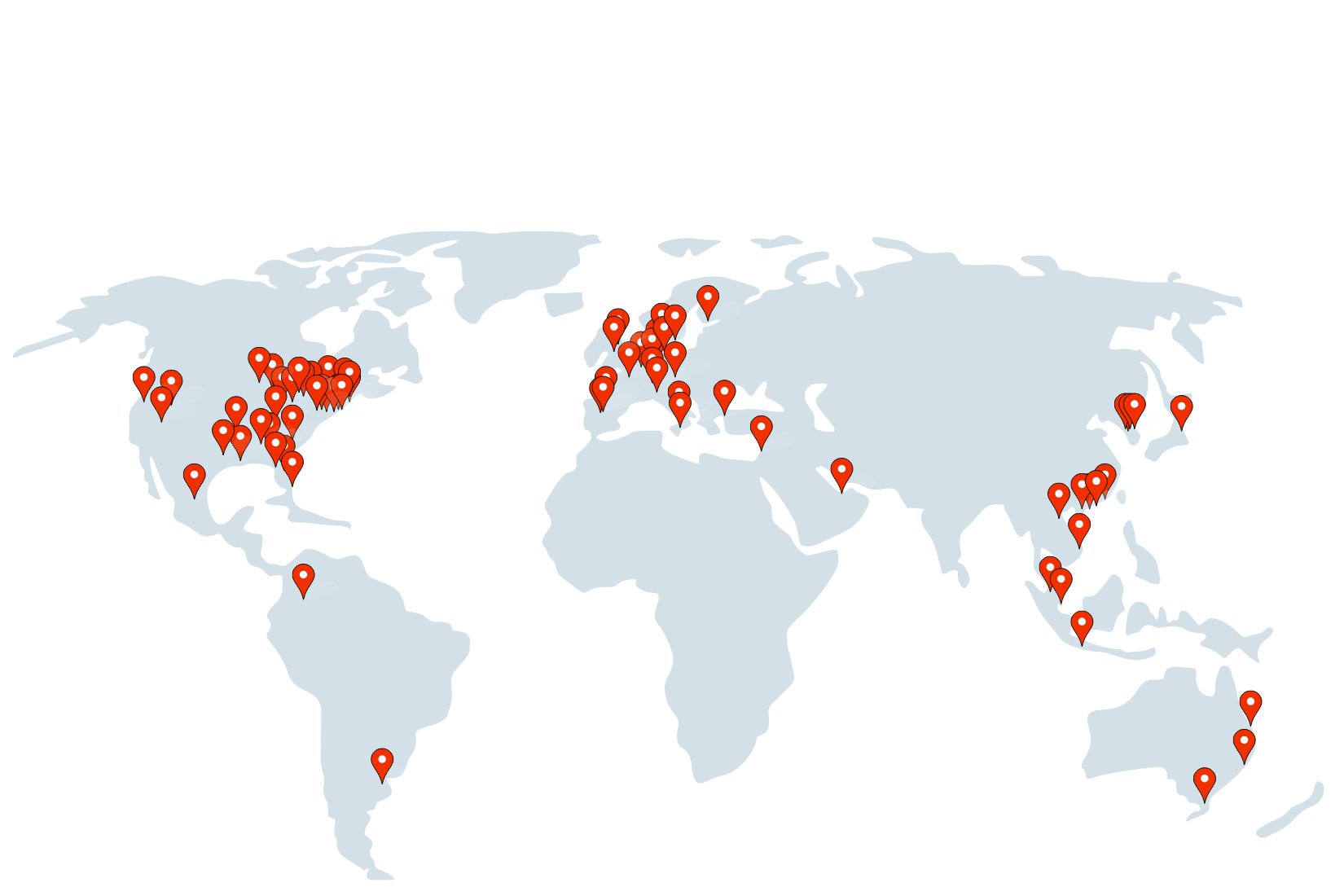
At IIE, we leverage our deep relationships with U.S. and global universities, expertise, and our international network of offices to design and deliver in-demand programming, resources, and services. Through the IIENetwork, for example, IIE convenes nearly 10,000 professionals from U.S. and international higher education institutions and organizations worldwide. We share best practices, host webinars and interactive discussions, and provide benefits such as first access to new data and student aid. Through this highly active, global network, IIENetwork members can stay on the cutting edge of higher education thought leadership and build relationships for fruitful collaboration.
In addition, IIE’s Generation Study Abroad resource hub is a collection of study abroad resources for students, families, and international education professionals. In our ongoing commitment to increasing the number of students participating in study abroad, we centralize the key study abroad research and publications to equip stakeholders. This includes Making the Case for Study Abroad, a quick reference for key data and talking points demonstrating the high-impact and value of study abroad for students and institutions linking IIE research and other source information to reinforce important outcomes such as gaining global knowledge and skills, improving academic degree outcomes, and preparing for the workforce.
Drive Impact with a Trusted Partner
The future of educational exchange will not be shaped by student interest alone. Targeted investment, evidence‑based strategy, and international partnerships are what will expand access and align mobility with national workforce and diplomatic goals.
For embassies and governments seeking to:
- Attract U.S. STEM talent,
- Deepen bilateral academic and research ties,
- Support regional development, or
- Build long‑term global talent pipelines,
IIE offers the scale, expertise, and trusted infrastructure to move from policy vision to measurable results—often within a single academic cycle. With the right partners, student mobility can become a cornerstone of national talent strategy and international engagement.