Energizing the Next Generation
Inaugural IIE Global Scholars Explore the Energy Sector in the U.S. and the Netherlands
Through a multi-year commitment from the Exelon Foundation, IIE partnered with Northern Illinois University (NIU) to launch the inaugural IIE Global Scholars Program Powered by the Exelon Foundation, preparing the next generation of leaders for the rapidly evolving energy sector.
As electricity demand grows alongside data centers, advanced manufacturing, and electric vehicles, the need for skilled talent continues to rise. Through programs that combine academic learning, international experience, and industry engagement, IIE is helping students develop the global competencies needed to succeed in one of the world’s most critical industries.
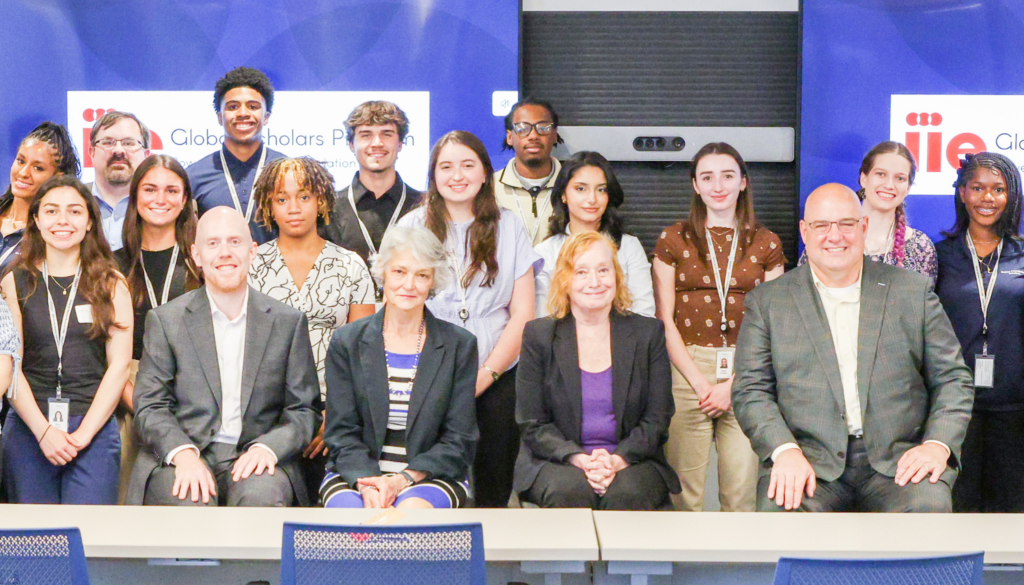
The first cohort brought together 17 undergraduate students from colleges and universities across the United States. All participants were also summer interns at Exelon or one of its operating companies. NIU designed and led a five-week program, enabling students to earn three credits transferable to their home institutions. The program consisted of a virtual course combining asynchronous readings and assignments with weekly discussions, followed by a study tour in Chicago and the Netherlands engaging with leaders across industry, government, academia, and civil society.
Connecting Energy Systems to Global Challenges
The program was designed to help students understand how energy systems are shaped by technology, policy, infrastructure, and community needs. In Chicago, scholars engaged with energy professionals, researchers, and policymakers to examine grid modernization, decarbonization, workforce development, and community resilience.
Highlights included a panel discussion with local industry experts at Exelon headquarters moderated by NIU Professor Dr. Thomas Skuzinski, visits to the ComEd Bronzeville Community Microgrid and Argonne National Laboratory, and conversations with leaders from Exelon and IIE, including Calvin Butler and Jason Czyz (read Jason’s experience engaging with the IIE Global Scholars).
The experience continued in the Netherlands, where students explored how another country is addressing energy transition through innovation, governance, and community engagement. In Delft, faculty from TU Delft and experts from Deltares introduced students to emerging approaches in geothermal energy, climate adaptation, and water resilience. In The Hague, meetings with the Ministry of Climate Policy and Green Growth and municipal leaders highlighted the role of policy in advancing sustainability goals. Visits to Groene Mient, a sustainable housing community, and the Port of Rotterdam demonstrated how local communities and major industries are contributing to the energy transition. Cultural experiences in Leiden and Amsterdam added important context to students’ understanding of Dutch society and its approach to sustainability.
By engaging with experts across sectors and countries, students developed a deeper understanding of both the technical and human dimensions of the energy transition.
As the program unfolded, the students provided updates on LinkedIn. For their firsthand reflections, follow #ExelonScholars and #IIEGlobalScholars.
Applying Knowledge to Action
The program culminated in team capstone presentations that challenged scholars to analyze energy systems and apply insights gained throughout the experience.
Post-program surveys demonstrated the impact of the program. Students reported growth in adaptability, global awareness, intercultural understanding, and their ability to connect international experiences with future career goals. Learning about another culture, experiencing life outside the United States, and strengthening professional skills ranked among the most significant outcomes.
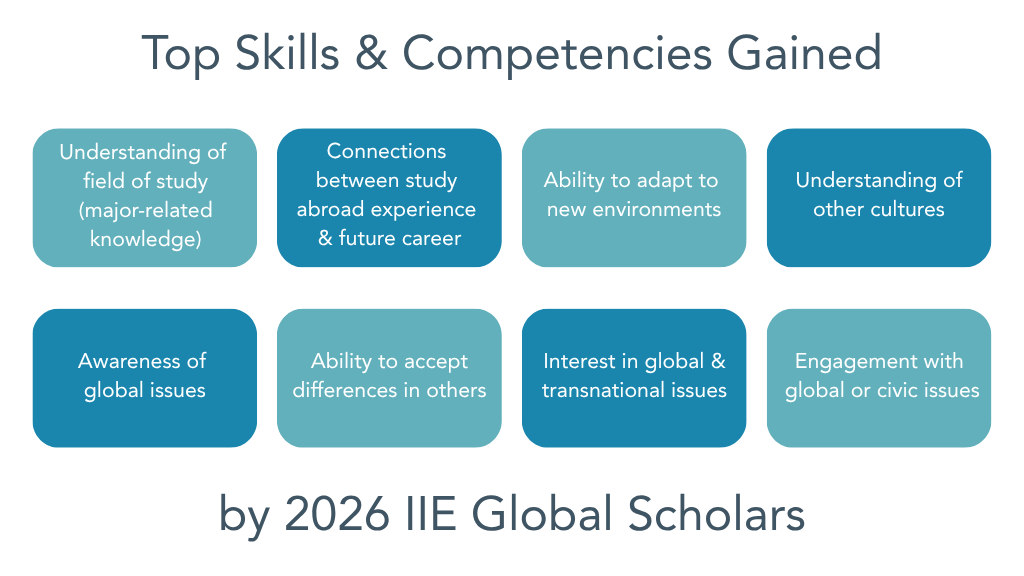
Participants reported growth in the following areas:
- Understanding of their field of study (major-related knowledge)
- Understanding connections between study abroad experiences and future career opportunities
- Ability to adapt to new environments
- Understanding of other cultures
- Awareness of global issues
- Ability to accept and appreciate differences in others
- Interest in global and transnational issues
- Engagement with global and civic issues
They also described increased confidence, broader career awareness, and a deeper appreciation for the role global collaboration plays in addressing energy challenges.
“I got to learn how to navigate a foreign country, and that made me feel more confident. It was cool to meet new people, speak with various professionals, and learn about how much more I can do than I previously thought.”
Another scholar reflected on the value of applying lessons across borders:
“I was able to learn more about what the Netherlands practices and how I can adopt their sustainability strategies back in the United States.”
These outcomes align with what employers consistently tell IIE they value: graduates who can communicate across cultures, navigate complexity, think critically, and collaborate across borders. Through the IIE Global Scholars Program, students gained not only knowledge of the energy sector but also the skills needed to lead within it.
Looking Ahead
The success of the IIE Global Scholars Program Powered by the Exelon Foundation demonstrates the power of partnership in preparing a globally minded workforce. IIE is grateful to Northern Illinois University, the many organizations that hosted site visits and discussions, and the industry, academic, and government leaders who shared their expertise with the inaugural cohort. The NIU team includes a collaborative effort among Lauren Mock, Study Abroad Director, and a team within the Institute for the Study of the Environment, Sustainability, & Energy: Melissa Burlingame Greenhagen, Assistant Director; Dr. Kevin Martin, Associate Professor of Engineering Technology; and Dr. Thomas Skuzinski, Associate Professor of Public Administration.
Special recognition is due to Paula Conrad and the Exelon Foundation for their partnership and commitment to expanding opportunities for students, as well as Calvin Butler for his leadership on the IIE Board of Trustees and advocacy for international education and workforce development.
Looking ahead, IIE is committed to expanding opportunities for future cohorts and strengthening pathways between global learning and career success. By investing in programs that connect students with international experiences and industry networks, partners can help prepare the next generation of energy leaders while advancing a more sustainable and prosperous future.
For inquiries about the IIE Global Scholars Program, contact IIE’s Center for International Opportunities: CIO@iie.org.
Contact IIE’s Center for International Opportunities
New Fellowships, Mentorship, and Professional Development Initiatives
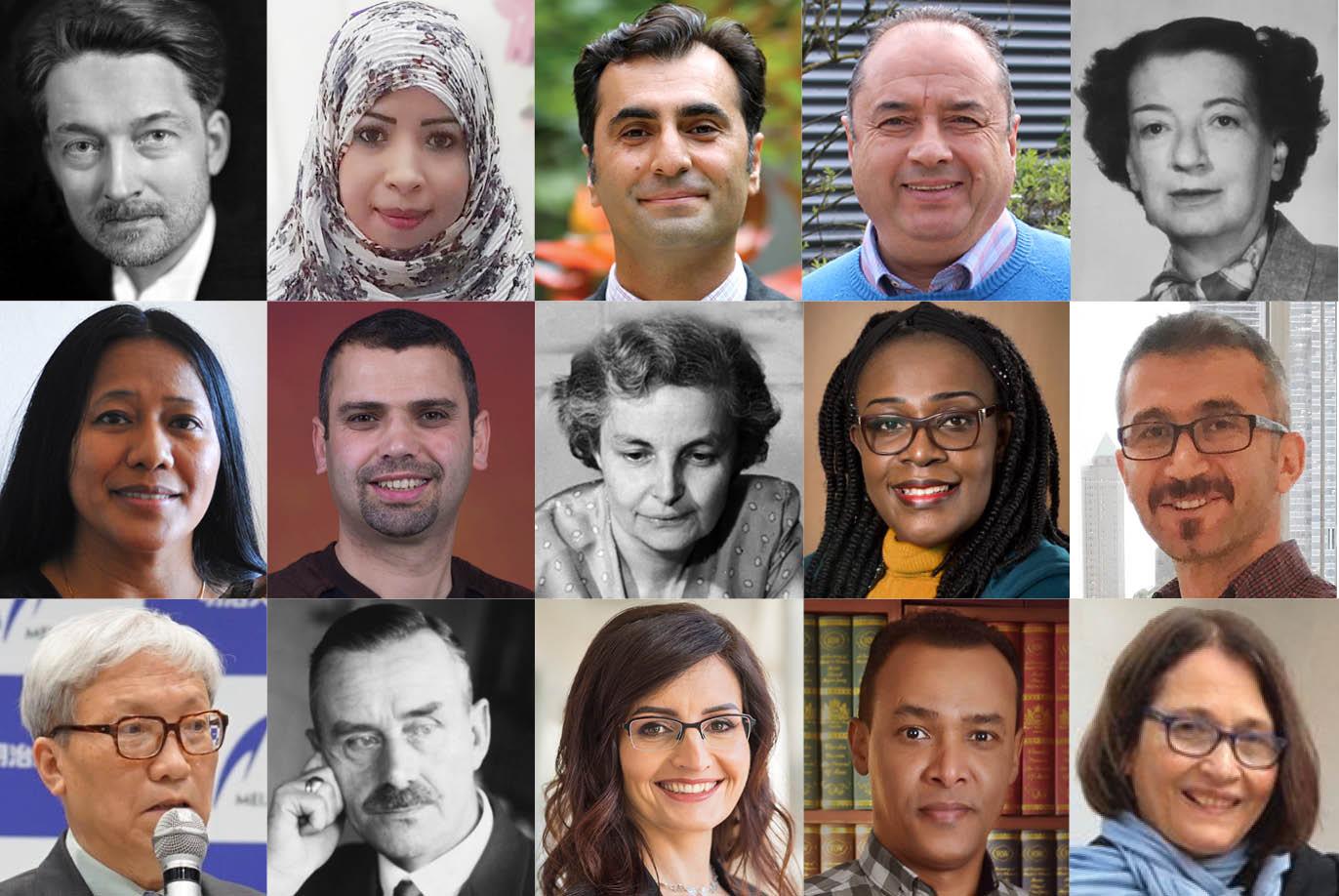
Pictured above, a panel of IIE-SRF alumni working in private industry, state government, and non-profits share their experience with the audience. Clockwise from top left: IIE-SRF Director James R. King, with alumni Dr. Tewodros Tesfamichael of Ethiopia, Dr. Dmitry Lapotko of Belarus, and Dr. Seyed Masoud Noori of Iran.
As conflict and crises continue to disrupt the work of scholars around the world, the Institute of International Education’s Scholar Rescue Fund (IIE-SRF) is helping threatened and displaced scholars to continue their research, teaching, and intellectual leadership.
This summer, IIE-SRF expanded that support through a new round of fellowships and new opportunities for mentorship, professional development, and networking designed to help scholars sustain and advance their careers over the long-term.
At its 111th meeting, the IIE-SRF Selection Committee awarded fellowships to 13 scholars from Cameroon, Iran, Myanmar, Palestine, Russia, and Sudan. Their fields range from public health to biophysics. IIE-SRF awards new fellowships quarterly.
For nearly 25 years, IIE-SRF has protected individual scholars and their families and safeguarded the scientific expertise, research capacity, and intellectual capital they contribute to their fields and communities. Since 2002, IIE-SRF has awarded more than 2,000 fellowships to threatened and displaced scholars, supporting them at host institutions in more than 60 countries across six continents.
Newly awarded IIE-SRF fellow Dr. Murtada Ahmed Mohammed Oshi, from Sudan, plans to advance his research in pharmaceutics and prepare for a future return home.
My long-term aspiration is not to leave Sudan forever, but to survive for its sake. My country is being hollowed out, and when the time for reconstruction arrives, it will need its experts more than ever. It will need researchers who have kept their skills sharp and their research current to rebuild the universities and train the next generation of pharmacists.”
Dr. Murtada Ahmed Mohammed Oshi, Sudanese pharmaceutics scholar and newly awarded IIE-SRF fellow
New Mentorship Initiative for Displaced Academics (MIDA)
Many IIE-SRF fellows specialize in science, technology, engineering, health, and other research-intensive disciplines, where professional networks and international collaboration are essential to advancing research and building careers. When scholars are forced to leave their home institutions, these connections are disrupted.
The displacement of scholars represents a loss for the individuals affected, for global scientific capacity, and therefore for society at large. By strengthening structured mentorship and academic integration pathways, we aim to ensure that scientific knowledge, expertise, and talent are preserved and reconnected to the global research system, even in times of crisis.”
Salvatore Aricò, Chief Executive Officer, International Science Council
To help address this challenge, IIE-SRF launched the Mentorship Initiative for Displaced Academics (MIDA) in partnership with the International Science Council (ISC), a global organization that brings together scientific institutions and researchers from around the world.
Through MIDA, IIE-SRF fellows will be paired with experienced mentors drawn from the ISC’s expansive global network of researchers and academic leaders. These relationships will complement the support fellows receive from their host institutions by helping them to navigate new academic environments, expand international research networks, identify funding and collaboration opportunities, and plan for long-term career growth.
Fellows will also participate in professional development workshops and networking activities focused on topics such as grant writing, career development, and research leadership.
By helping scholars maintain research momentum, broaden their professional networks, and access new collaborative opportunities, MIDA reinforces IIE-SRF’s broader mission of preserving global scientific capacity.
During their fellowships, IIE-SRF fellows are asked to adapt quickly to diverse global academic contexts, and we know they benefit from multiple points of contact to ease this transition and maximize their opportunities. MIDA will help fill this gap. The ISC, with its truly global network of outstanding scientists and a demonstrated commitment to promoting freedom and responsibility in science, is exceptonally positioned to lead this initiative. We commend the ISC for its leadership in developing this unique, practical support for displaced scholars.”
Emily Borzcik, Europe Director, IIE Scholar Rescue Fund
New Career Development Lab
Mentorship is only part of the support scholars need to rebuild their careers after displacement. This summer, IIE-SRF partnered with New Voices in Sciences, Engineering, and Medicine of the National Academies and the Global Young Academy (GYA) to organize a three-day virtual Career Development Lab for fellows and alumni in North America.
The event brought together more than 50 current fellows and recent alumni representing 14 countries, along with nearly 40 expert speakers across more than a dozen sessions. Notably, 14 IIE-SRF alumni returned as speakers, sharing lessons from their own academic and professional journeys after displacement. Their participation reflected another important dimension of IIE-SRF’s impact: scholars who once received support are now helping others navigate similar challenges.
Sessions explored the responsible use of artificial intelligence, academic publishing, research funding, leadership development, and career pathways both within and beyond academia. Participants highlighted the opportunity to explore career options, strengthen professional skills, and connect with peers and mentors.
“Too often, displaced scholars are viewed solely through the lens of vulnerability. I believe we must also recognize them as innovators, educators, and scientific leaders. Leaving their talent untapped would be a real loss to the world,” said Dr. Saja Al Zoubi, co-lead of the North America Chapter of GYA’s At-Risk Scholars Initiative, who initially proposed the workshop idea to IIE-SRF and New Voices.
Strengthening a Global Community
These new opportunities are strengthened by the growing IIE-SRF Alliance, which surpassed 1,000 members this summer. The milestone reflects IIE-SRF’s expanding global network of universities, scholarly associations, scientific organizations, and individual supporters committed to helping threatened and displaced scholars continue their work.
Individuals, institutions, and organizations can join the IIE-SRF Alliance. Alliance partners receive regular updates from IIE-SRF regarding scholars in need of academic appointments or support services, as well as other information about how to get involved in supporting threatened and displaced scholars. Learn more about joining the Alliance.
Join the IIE-SRF Alliance
Drawing on IIE Research and the Experiences of Higher Education Partners, Expert Panelists from IIE, AIFS, and Towson University Offer Evidence-Based Recommendations for Designing and Scaling Up Global Internships
As higher education institutions seek new ways to prepare students for an increasingly global workforce, IIE continues to develop research and convene experts to identify what works. At the NAFSA Annual Conference & Expo in May, IIE teamed with the American Institute for Foreign Study (AIFS) and Towson University to lead an interactive discussion, Career Pathways in a Global Workforce: Why International Experiences Matter.
The session examined data-backed connections between global internships and workforce outcomes and offered practical, scalable strategies for institutions seeking to align international experiences with career pathways. Expert panelists included:
- Mirka Martel, Ph.D.,Head of Research, Evaluation & Learning, Institute of International Education (IIE)
- Kelly Holland, Vice President, Strategic Communications & Engagement, American Institute for Foreign Study (AIFS)
- Christopher Powers, Assistant Vice President for International Initiatives, Towson University
What IIE Data Says About Global Internships and Skills Development
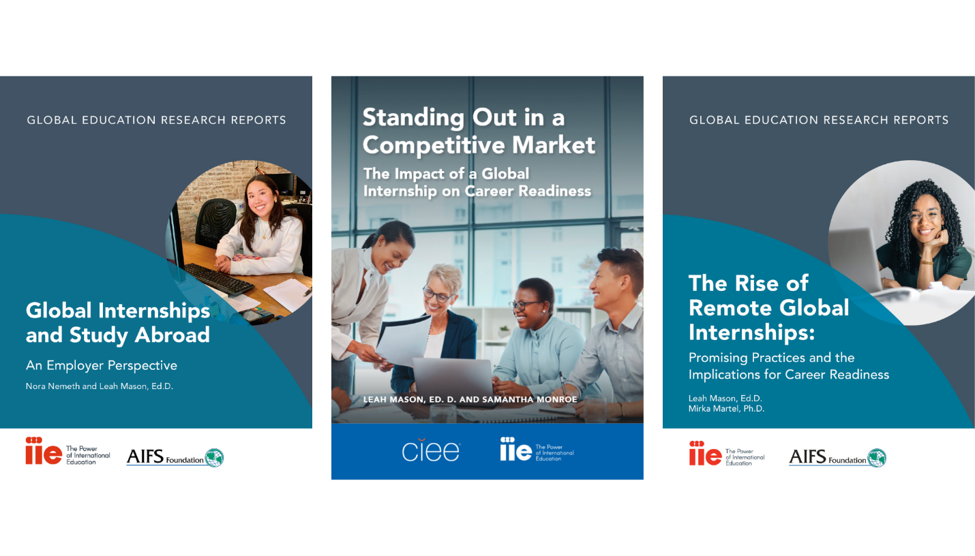
Drawing on IIE’s recent study, Standing Out in a Competitive Market: The Impact of a Global Internship on Career Readiness, Martel shared three key findings:
- Global internships significantly strengthen competencies critical to success in today’s workforce, including confidence, communication, flexibility, and adaptability.
- 80% of alumni respondents reported that their international internship supported their career pathways, and 85% highlighted these experiences on their résumés—demonstrating clear alignment with employability outcomes.
- 86% of respondents said their global internship influenced their career goals, helping them to clarify professional direction and make more targeted career decisions.
As part of the Global Education Research Reports series, IIE and AIFS continue to advance the evidence base for this work through publications such as:
- The Rise of Remote Global Internships: Promising Practices and the Implications for Career Readiness,
- Passport to Leadership: The Influence of Education Abroad on Career Pathways and Leadership Development Across Industries and
- Global Internships and Study Abroad: An Employer Perspective, in which more than 70% of employers indicated they would hire their international interns full-time if possible.
Defining Quality and Impact in Global Internships
A key theme throughout the session was the need for institutions to define and measure what makes a global internship effective, not just in terms of participation, but in terms of career outcomes and measurable employability gains.
Panelists emphasized that successful models prioritize:
- intentional learning outcomes tied to recognized frameworks, such as the National Association of Colleges and Employers’ (NACE) Career Competencies,
- structured reflection practices that help students translate experience into marketable skills, and
- clear alignment with employer expectations to ensure relevance and value.
Holland emphasized that quality is driven by program design. Institutions that integrate reflection, mentorship, and assessment are better positioned to demonstrate tangible employability outcomes to both students and employers.
Building Sustainable, Cross-Functional Programs
For many institutions, one of the most persistent challenges is organizational alignment. Powers shared examples to illustrate how cross-functional collaboration enhances both program quality and scalability at Towson University. Cross-functional collaboration strengthens both program quality and career alignment by ensuring internships meet academic requirements and workforce expectations simultaneously.
Recommended strategies include:
- Facilitate ongoing dialogue across campus stakeholders—such as academic departments, career centers, and study abroad offices—to align goals, resources, and networks
- Establish consistent feedback mechanisms to refine and improve program outcomes
- Embed employability frameworks into the program design and student reflections
This integrated approach helps to break down silos and ensures that global internships are embedded within broader institutional strategies, said Holland.
Scaling Programs Strategically
While interest in global internships continues to grow, many institutions remain in early stages of development. The panelists suggest that scale should be approached incrementally, with a focus on career relevance, sustainable impact, and alignment rather than rapid expansion.
Martel, Holland, and Powers offered several strategies for institutions looking to build or expand programs:
- Start with a focused pilot, ideally in a high-demand discipline(s)
- Leverage existing international partnerships or experienced providers to manage logistics
- Integrate internships into academic structures such as credit-bearing courses
- Engage faculty champions to drive adoption and credibility
The panelists stressed the importance of selecting the right entry point—such as a receptive academic unit or a high-demand discipline—which can create early momentum and support long-term growth.
A Strategic Opportunity for Higher Education
Global internships can serve as a powerful mechanism to connect workforce needs to higher education. When designed intentionally and supported through cross-campus collaboration, these programs deliver measurable benefits such as enhancing student employability, strengthening employer partnerships, and advancing institutional goals.
IIE in Full Force
The panel session was among the more than 20 sessions and one pre-conference workshop led by 17 IIE team members at the 2026 NAFSA Annual Conference. IIE team members covered topics such as partnerships, career readiness, and regional strategies for student recruitment. IIE’s Research, Evaluation, and Learning unit continues to shape the field through its publications; they released the latest Open Doors data on Intensive English Programs and Passport to Leadership. IIE also celebrated a major milestone and partnership, hosting receptions for the Fulbright Program’s 80th Anniversary and the Korea – U.S. Special Exchange Program for STEM Students (KORUS).
The Program—Which Has Provided Full Scholarships to 200+ Students from 22 Countries—Hosted Its First Virtual Graduation to Commemorate Five Years of Impact
On June 15, the Institute of International Education (IIE) hosted its inaugural virtual graduation of IIE Odyssey Scholars, coinciding with the program’s five-year anniversary. Since its founding, the Odyssey Scholarship has supported more than 200 students displaced from 22 countries, enabling them to pursue higher education and the knowledge, skills, and networks needed to shape their futures and contribute to their communities.
Each Odyssey Scholar’s journey reflects a broader global reality: for young people, displacement severs access to educational systems and closes off opportunities for personal, academic, and professional advancement. For Odyssey Scholarship recipients Parisa Fadayee, Mark Ubur, Mary Paula, and Shami Cedric, these global trends are deeply personal and serve as a call to action.
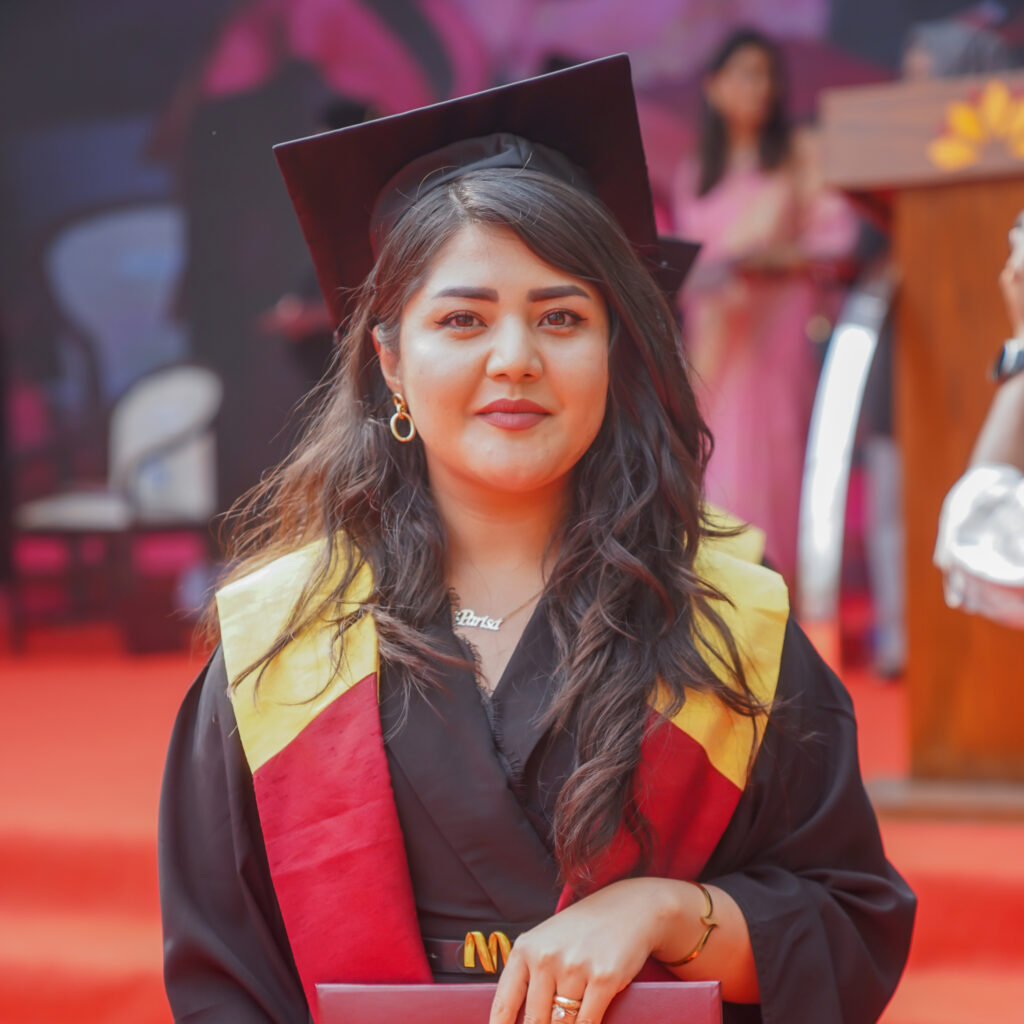
Originally from Afghanistan, Parisa Fadayee earned a Master of Education degree from the Asian University for Women in Bangladesh.
For Parisa Fadayee, who graduated in May 2025 from Asian University for Women (AUW), education shaped her future and her sense of purpose. “As an Afghan woman, earning a degree is much more than an academic achievement—it is an act of resilience and hope.”
As an Afghan woman, earning a degree is much more than an academic achievement—it is an act of resilience and hope.”
— Parisa Fadayee
She now supports teacher training in the Rohingya refugee camps through a program implemented by AUW and UNICEF, helping educators better serve displaced children. “When teachers are equipped with the right skills and knowledge, they can positively influence the lives of hundreds of students.”
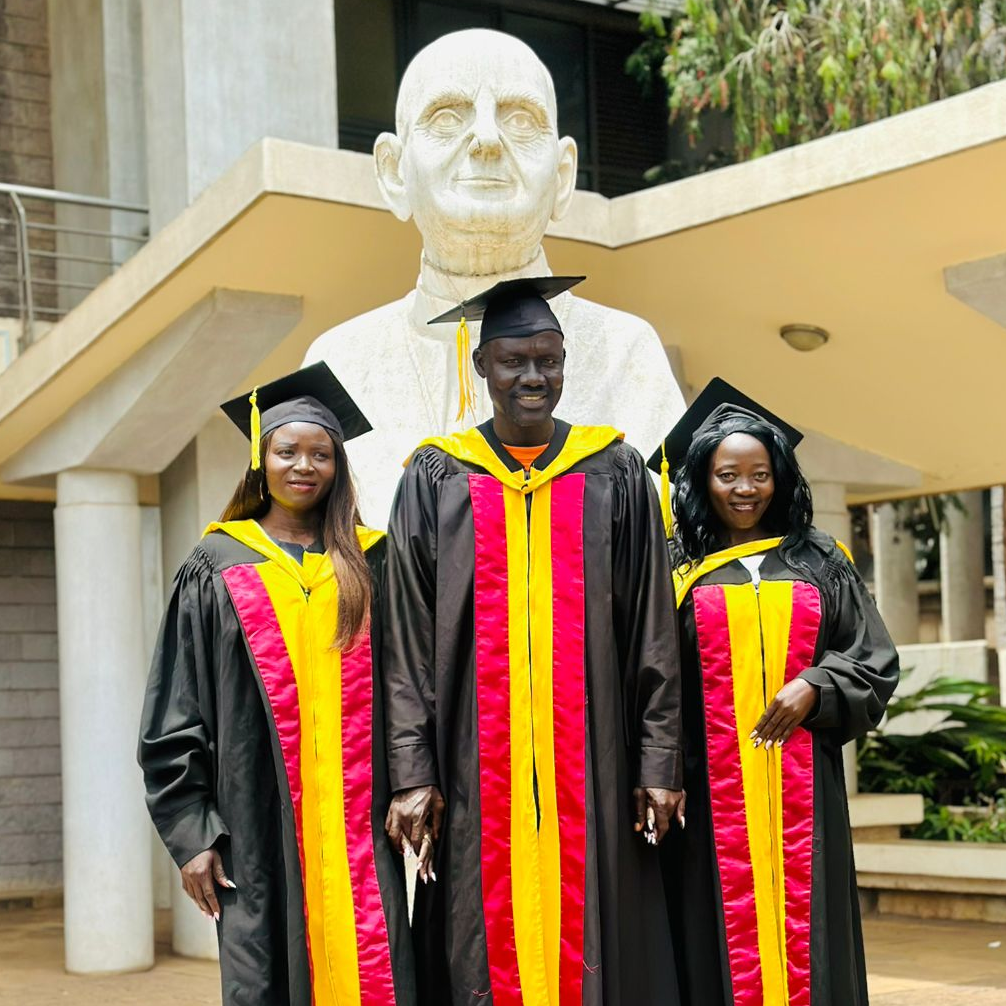
Originally from South Sudan, Mark Ubur earned a Master of Project Management degree at Catholic University of Eastern Africa in Kenya.
Mark Ubur, who earned a master’s degree in project planning and management from the Catholic University of Eastern Africa, describes his degree as both a personal milestone and a foundation for future impact.
I can envision a society where I can use my knowledge and skills to promote peaceful co-existence… and solve social problems affecting the community.”
— Mark Ubur
“My degree is evidence that I have advanced knowledge and skills that I can use to support myself and my family,” he said. “I can envision a society where I can use my knowledge and skills to promote peaceful co-existence and solve social problems affecting the community.”
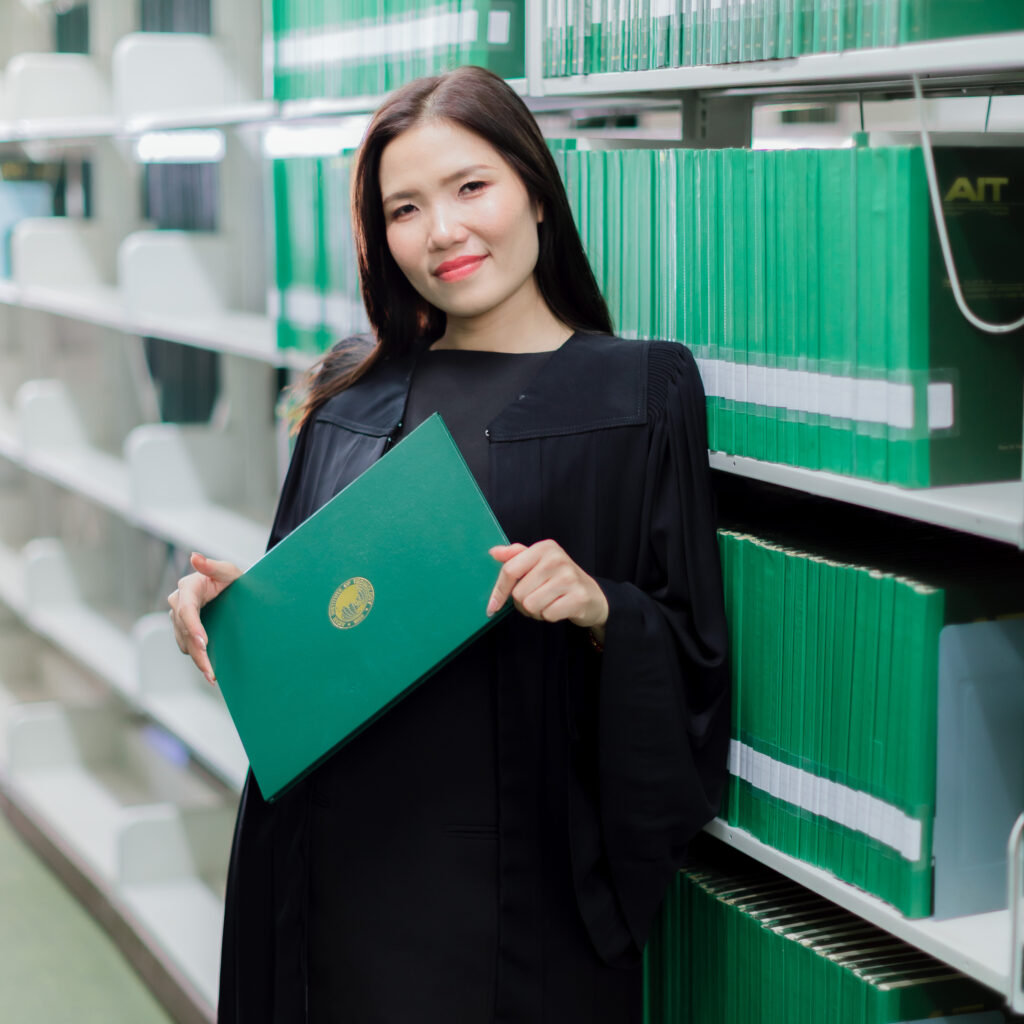
Originally from Myanmar, Mary Paula earned a master’s at the Asian Institute of Technology in Thailand.
Mary Paula’s path from Myanmar reflects similar resilience. After earning her master’s degree, she continues to focus on creating positive change. “Earning a degree is deeply important to me… it allows me to contribute meaningfully to my community,” she said. “Meaningful achievements require sacrifice, persistence, and dedication… even small efforts can contribute to lasting change.”
Meaningful achievements require sacrifice, persistence, and dedication… even small efforts can contribute to lasting change.”
— Mary Paula
Shami Cedric, a recent graduate from the Democratic Republic of Congo, reflected on how the Odyssey Scholarship helped him realize his academic aspirations. While he successfully relocated and gained admission to Addis Ababa University, Shami was unsure how he would manage to pay his school fees. Then he learned that he had been selected to receive an IIE Odyssey Scholarship, which covers all educational and living expenses.
“The Odyssey Scholarship… reminded me that there are people and organizations that truly believe in students like me and want to see us succeed. It pushed me to work even harder and to continue striving toward my goals.”
Drawing on both his academic training in economics and his lived experiences in the DRC, Shami deepened his understanding of the complex forces driving unemployment, poverty, and development across Africa. Now equipped with a bachelor’s degree, Shami says, “I want to use both my education and experiences to help develop practical solutions for communities facing economic and social challenges.”
I want to use my education to contribute to solutions that create opportunities for young people and help communities grow sustainably.”
— Shami Cedric
Originally from the Democratic Republic of Congo, Cedric earned a bachelor’s in economics from Addis Ababa University in Ethiopia.
Although from different regions, Parisa, Mark, Mary, and Shami demonstrate the multiplier effect of education; it becomes a platform for action, enabling graduates to contribute to their communities and shape self-reliant, resilient futures.
Less than 10% of displaced youth have the opportunity to participate in higher education programs. In the face of protracted crises around the world, an estimated one in every 70 people has fled their homes in search of safety and stability. IIE created the Odyssey Scholarship to formalize its 100+-year legacy of supporting talented students uprooted by catastrophic events. IIE leverages its international network of offices and contacts across Africa, the Americas, and Asia to identify high-performing nominees. Recipients benefit from a full-tuition scholarship, personal and career support services, and stipends to cover their housing and other school-related expenses.
Through the generous support of donors, IIE has issued more than 2,300 scholarships, fellowships, and grants to displaced students, scholars, and artists through its groundbreaking initiatives such as the Odyssey Scholarship, Artist Protection Fund, and Scholar Rescue Fund.
Please help us support students, scholars, and artists whose
futures are at risk.

Through a New Survey, IIE Is Building the First Global Picture of International Academic Partnerships
International partnerships have become one of the defining strategies for higher education institutions seeking to expand research, student mobility, workforce development, and global engagement. Yet despite their growing importance, the field lacks reliable global data on how these partnerships are structured, managed, and evolving. Without comparable data, institutions have limited ability to benchmark their efforts, identify emerging trends, or make evidence-based decisions.
To expand the body of knowledge in this under-researched space, IIE’s Center for International Partnerships (CIP) has launched the comprehensive International Partnership Landscape Survey (IPLS), the first survey solely dedicated to understanding international partnerships in higher education on a global scale. The survey, aimed at higher education professionals, examines why institutions pursue partnerships, how they manage them, where collaboration is expanding, and what challenges and opportunities are shaping the future of international engagement. Over time, the survey will produce comparative data that can help institutions strengthen their partnership strategies and provide researchers, policymakers, and organizations with a valuable resource for understanding global trends in higher education.
The survey is being conducted in regional stages to capture both global and local perspectives. Stage 2 is now underway across East Asia and the Pacific, expanding the project’s reach while generating new insights into one of the world’s most dynamic higher education regions.
To support this effort, the CIP is collaborating with the experts at the Asia-Pacific Association for International Education (APAIE) who helped tailor the survey to reflect the region’s unique higher education landscape and partnership ecosystem. APAIE will also lead outreach efforts throughout East Asia and the Pacific, helping to ensure broad institutional participation and robust regional data. Together, IIE and APAIE aim to deepen understanding of how institutions can build stronger, more sustainable, and more impactful international partnerships.
The survey builds on the success of Stage 1, which launched in fall 2025 and gathered responses from higher education institutions in Canada, Europe, and the United States. The Stage 1 responses suggest that international partnerships are becoming more strategic, more institutionally integrated, and more closely aligned with long-term organizational priorities.
Three themes emerged from the initial data.
- First, institutions are professionalizing partnership management. More than half of respondents reported having a dedicated institutional partnership manager, while 80% maintain centralized databases to track international partnerships. These findings suggest that institutions increasingly view partnerships as a strategic institutional function supported by dedicated leadership and infrastructure.
- Second, institutions are expanding their geographic engagement. More than half of respondents reported maintaining partnerships in every region of the world, reflecting a broad commitment to global collaboration.
- Finally, partnerships themselves are becoming more multifaceted. Once centered primarily on student mobility, they now frequently encompass collaborative research, faculty exchanges, virtual learning, institutional planning, and shared outreach initiatives. This evolution reflects a broader understanding of partnerships as long-term strategic relationships that support multiple dimensions of institutional success.
Higher education institutions across East Asia and the Pacific are encouraged to participate in Stage 2 of the IIE International Partnership Landscape Survey, which remains open through October 1, 2026. Access the survey here to participate. By sharing their experiences, institutions will help to build a richer understanding of international partnerships and strengthen the evidence base that supports global higher education collaboration for years to come.
IIE gratefully acknowledges the expertise and dedication of the survey leads and the International Partnership Landscape Survey Advisory Council, whose guidance have been instrumental in developing the survey.
Survey Leads
- Sylvia Jons, Director, IIE Center for International Partnerships
- Susan Buck Sutton, IIE Center for International Partnerships Fellow
- Cori Crisfield, Manager, IIE Center for International Partnerships
- Kari Kuja, Senior Advisor to the CEO, IIE
Advisory Council
- Jane Gatewood, Vice Provost for Global Engagement and Services, Emory University
- Robin Matross Helms, Vice President, Membership & Educational Services, The Association of Community Colleges Trustees (ACCT)
- Jody Hoekstra-Selten, Knowledge Development Officer, European Association for International Education (EAIE)
- Chad Hoseth, Assistant Vice Provost of International Affairs, Colorado State University
- Louise Kinnaird, Executive Director, APAIE
- Bill Lacy, Vice Provost Emeritus for University Outreach and International Programs, University of California Davis
- Giorgio Marinoni, Manager of Higher Education and Internationalization, International Association of Universities
- Mirka Martel, Head of Research, Evaluation & Learning, IIE
To participate in the International Partnership Landscape Survey (IPLS)
This spring, as students celebrated graduation on campuses around the world, the Qatar Scholarship for Afghans Project (QSAP) recognized 74 talented and determined scholars who completed – or are expected to complete – their degrees during the 2025 – 26 academic year. Pursuing fields ranging from law to mechanical engineering, this year’s QSAP graduates earned degrees from more than 27 higher education institutions worldwide. To recognize this milestone, QSAP partners and supporters gathered for a virtual graduation ceremony on June 2, 2026. Through partnerships with higher educational institutions around the globe, QSAP provides students displaced from Afghanistan the opportunity to continue their education and pursue degrees outside their country of origin.
“QSAP is a testament to the impact of international cooperation. Together with IIE’s partners, we have helped create pathways for Afghan students to continue their education and achieve this important milestone,” said Jonah Kokodyniak, IIE’s Executive Vice President. “Their success reflects both their resilience and the power of sustained global commitment to education.”
The graduates’ achievements were made possible through the support of the Afghan Future Fund (AFF), Education Above All Foundation (EAA), Qatar Fund for Development, the Institute of International Education, and the Yalda Hakim Foundation.
These graduates join more than 400 QSAP scholars from Afghanistan who have pursued higher education at colleges and universities across North America and Europe since the program launched in 2021.
Voices of QSAP Scholars
“Success that stops with us is incomplete. Let us continue opening doors for others.”
Fawzia Mohammadi, QSAP Class of 2026, Master of Laws (LL.M.) Penn State Dickinson Law; Legal Assistant, Kakar Advocates Law Firm LLC, Kabul, Afghanistan
As these graduates begin professional careers or continue their academic journeys, they embody the QSAP’s mission of developing globally minded leaders who have demonstrated resilience, perseverance, and determination in the face of extraordinary challenges.
Follow the journey of QSAP scholars on the IIE Opening Minds Blog. Their education is transforming lives and helping shape a brighter future for Afghanistan.
At APAIE 2026, IIE Experts Led Five Sessions and Hosted a Reception for Global Partners
The Asia-Pacific region is playing a key role in shaping the future of international higher education. At the 2026 Asia-Pacific Association for International Education (APAIE) Conference in Hong Kong, the Institute of International Education (IIE) reinforced its long-standing strategic partnerships and initiatives that create opportunities for universities, governments, students, and scholars in the region and worldwide.
For more than 60 years, IIE has maintained deep engagement across the Asia-Pacific, supported by its offices and collaborations with universities, governments, and organizations throughout the region. With teams based in Bangkok, New Delhi, and other cities across East Asia and the Pacific, IIE works closely with stakeholders to strengthen global academic collaboration, support student mobility, and foster pathways to higher education. As demand for STEM skills increases, IIE has been selected to administer several in-demand, global education programs with a presence in the Asia-Pacific, including the following programs:
IIE’s work also extends to those affected by crises such as displacement due to extreme weather and civil war; through its Crisis Response initiatives such as the Odyssey Scholarship and the Scholar Rescue Fund, IIE provides vital opportunities for the growing number of students and scholars affected by conflict, displacement, or unrest in this region. Since 2018, IIE’s Southeast Asia regional office in Bangkok has awarded more than 300 scholarships to refugees from Myanmar.
The APAIE Conference brought together universities, policymakers, scholarship providers, and international education organizations to explore the theme, Asia-Pacific Partnerships for the Global Good. “International partnerships are evolving rapidly, and institutions need data-driven insights to navigate this changing landscape,” said Jonah Kokodyniak, Executive Vice President at IIE. “Through our collaboration with APAIE, we look forward to bringing stronger Asia-Pacific perspectives into the global conversation and providing governments and institutions with practical insights to build meaningful, sustainable partnerships.”
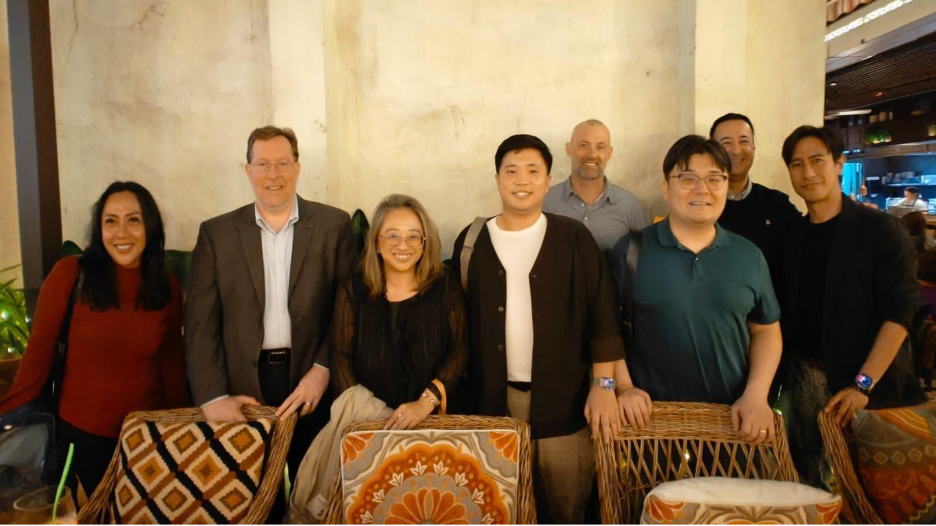
Throughout the conference, IIE leaders shared their expertise, facilitated critical discussions in five sessions, and convened a global partners reception and corollary meetings.
Expanding Opportunity for At-Risk Students and Scholars in the Region
Extreme weather such as flooding and earthquakes and other long-term crises have displaced more than 17 million people throughout the Asia-Pacific. In the panel, Partnerships for the Global Good: Expanding Opportunity for At-Risk Students and Scholars, IIE President Jason Czyz joined global leaders to discuss the role of collaborative initiatives in supporting displaced and vulnerable learners. “Partnerships are the foundation of international education’s impact,” said Czyz. “When institutions, governments, and organizations work together across borders, we can support talented students and scholars and create opportunities for them to contribute to their communities and the world.”
Other IIE-led sessions highlighted sustainable global student mobility programs, innovative models for collaboration, and pathways to higher education for students facing significant barriers. These discussions also emphasized how IIE’s Crisis Response initiatives like the Odyssey Scholarship provide tangible, life-changing support to learners navigating crises while reinforcing the broader role of strategic partnerships in international education.
IIE Global E3 Consortium: Preparing Engineers for a Global Workforce
APAIE provided a forum for IIE to engage members of the IIE Global E3 Consortium, a network of leading engineering institutions committed to expanding international mobility for engineering students. IIE hosted a Global E3 meetup, bringing together institutional representatives to exchange perspectives, reconnect, and explore opportunities for strengthening engineering exchange programs in the region. The gathering highlighted the consortium’s commitment to preparing engineers for a global workforce through international collaboration.
Celebrating Global Partnerships
Beyond formal sessions, APAIE offered an opportunity to reconnect with long-standing partners and cultivate new collaborations. IIE hosted a Global Partners Reception, welcoming more than 70 colleagues from universities, governments, and international organizations. The event recognized established partnerships and explored opportunities for collaboration, reinforcing IIE’s role as a trusted partner in the Asia-Pacific higher education ecosystem.
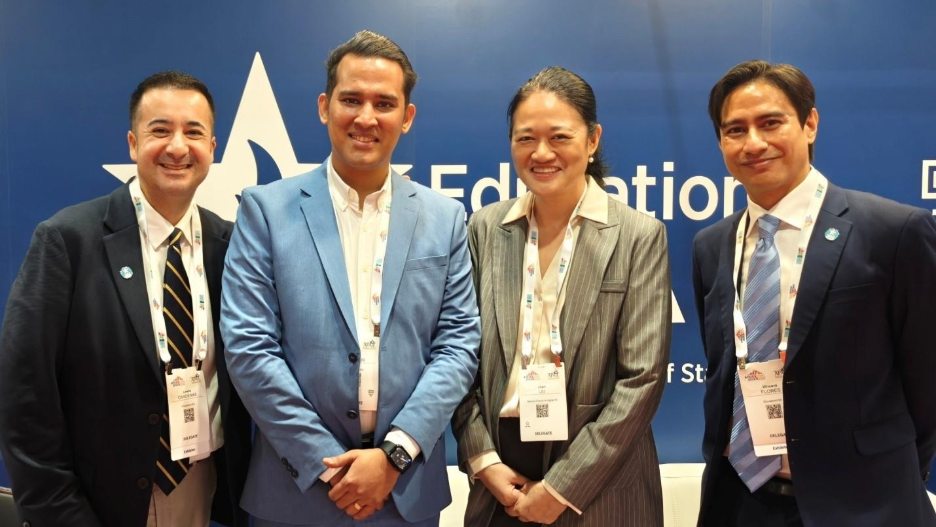
Throughout the conference, IIE delegates met with universities, scholarship agencies, and global organizations to advance mission-aligned initiatives, including programs supporting scholars and students affected by crises. These engagements reflected the breadth of IIE’s work, from promoting global student mobility to ensuring that at-risk learners can continue their education.
Looking Ahead
Collaboration across institutions and sectors remains essential to strengthening research, fostering academic collaboration, and preparing students to thrive in a globally connected world. “Gatherings like APAIE remind us how interconnected our work is,” said Czyz. “The relationships built here lead to new collaborations, innovative programs, and new possibilities for students and scholars around the world.”
As IIE continues its work with partners across Asia-Pacific and beyond, the organization remains committed to advancing both global academic collaboration and its Crisis Response initiatives, building pathways that connect talent, knowledge, and opportunity worldwide.
Related Programs

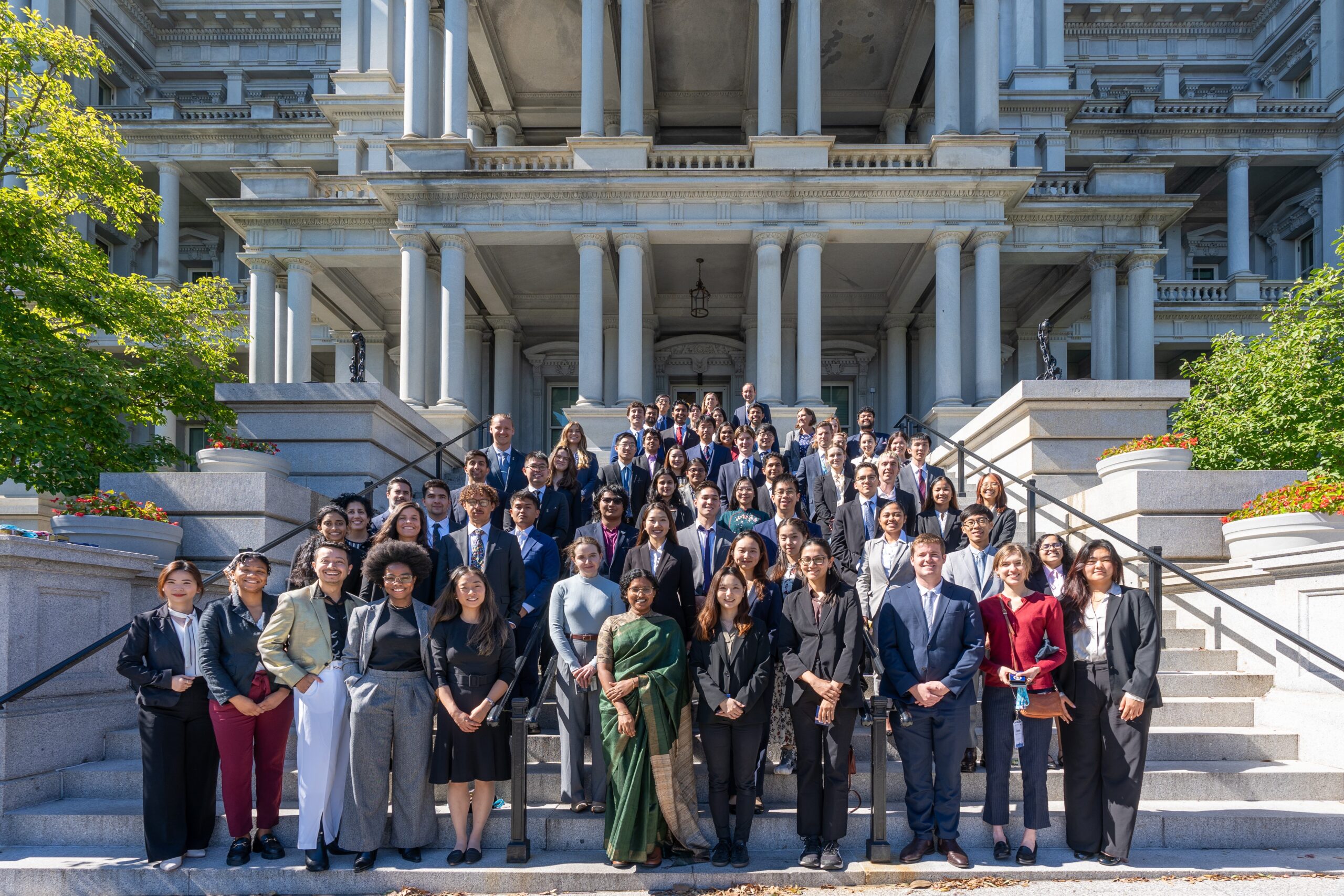
April is Community College Month. Standing at the forefront of workforce development and local economic growth, community colleges are increasingly exposing and connecting students with international education opportunities. This strategy prepares students to be more competitive in the future global workforce. Competencies such as language skills, adaptability, and the ability to collaborate in a globally interconnected world are now essential in nearly every sector, from healthcare and advanced manufacturing to cybersecurity and business.
Open Doors data continue to underscore the reach and relevance of community colleges for both American students studying abroad and students who travel to the United States for study. More than 5,700 U.S. community college students studied abroad in 2023/24. Studying at a U.S. community college also holds global appeal, with international students traveling from nearly 200 countries across the world to pursue educational opportunities. Nearly 64,000 international students attended U.S. community colleges in 2023/24, representing approximately 5% of all international students nationwide.
Community colleges are at the forefront of ensuring that international education is accessible, workforce-relevant, and responsive to community needs. The IIENetwork, IIE’s membership association, serves as a strategic partner to many community colleges, connecting them to resources, visibility, funding opportunities, and an international network of peers working at the intersection of global learning and workforce development. Through opportunities made available exclusively to IIENetwork members, institutions gain the tools, recognition, funding access, and peer connections needed to scale their impact and prepare students for success in a global economy.
Why Peer-to-Peer Networking and Collaboration Matter for Community Colleges
Through IIENetwork membership, colleges join an international community that elevates institutional impact and student outcomes. Benefits include:
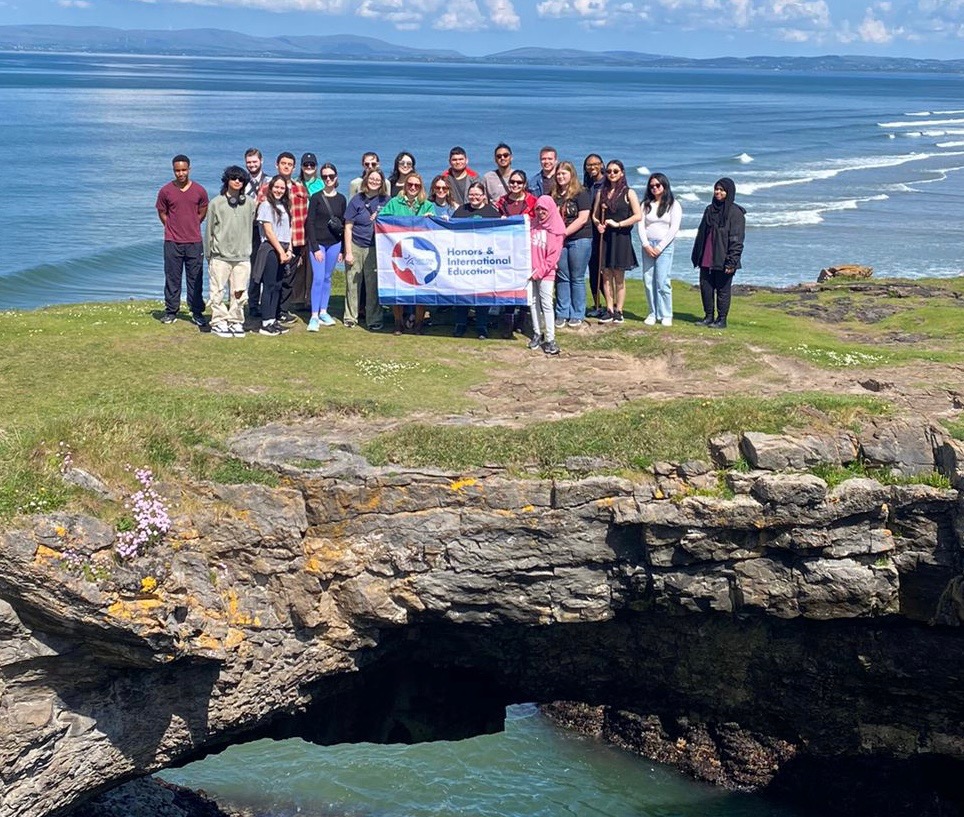
- Recognition and Visibility: IIENetwork members are eligible for prestigious honors such as the IIE Andrew Heiskell Awards for Innovation in International Education, which spotlight exemplary programs and raise institutional profiles nationally and globally.
- Grant and Funding Opportunities: Many IIE-administered initiatives, including the American Passport Project and Emergency Student Fund, are exclusively available to IIENetwork members. These initiatives help institutions to remove financial barriers and expand student participation.
- Peer Learning and Best Practices: Members connect with industry experts and colleagues across institution types and regions, sharing models for internationalization that are scalable, equitable, and workforce aligned. The IIENetwork hosts numerous webinars each year, providing members with forums for thought leadership and information sharing.
- Thought Leadership Platforms: Community college leaders and practitioners also contribute to the semiannual IIENetworker magazine and the IIE Opening Minds Blog, ensuring their voices shape the broader international education field.
The IIE American Passport Project
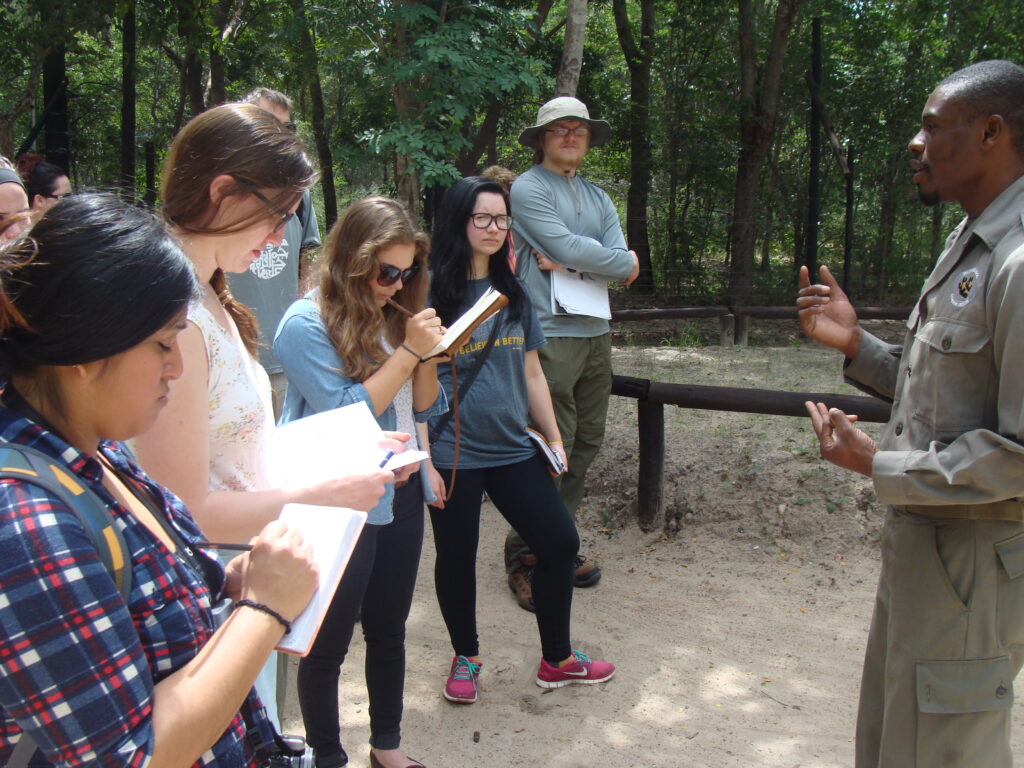
The costs associated with studying abroad—including passport application fees—prevent a significant portion of American college students from embarking on the experience. IIE created the American Passport Project in 2020 to cover the costs associated with passport applications. To date, 25 community colleges have received Passport Project grants, enabling nearly 550 students to obtain their first U.S. passports and participate in international experiences.
Student voices reflect their motivations to participate in the career-shaping impact of these opportunities:
Cybersecurity is an important career and I want to see how it functions in other parts of the world.”
Bergen Community College Student
I would like to study medicine abroad and gain a better understanding of how forensics works outside of the United States.”
Mesa Community College
These experiences help students connect classroom learning to global career pathways, strengthening both confidence and employability.
Recognition Through the IIE Heiskell Awards
Through the Heiskell Award program, IIE has witnessed firsthand how community colleges directly align international education with career preparation.
Lone Star College received the Heiskell Award for Widening Access to International Education in 2025. Its Global EdVantage initiative has significantly expanded student participation in global learning while strengthening transfer success, career outcomes, and in-demand work skills for thousands of students throughout Texas. By integrating global coursework, faculty development, study abroad, virtual exchange, and co-curricular programming across the large, multi-campus system, the initiative illustrates how international education can be embedded in a range of student pathways, not just traditional study abroad terms. Read more to learn how the professionals at LSC built this comprehensive and scalable model.
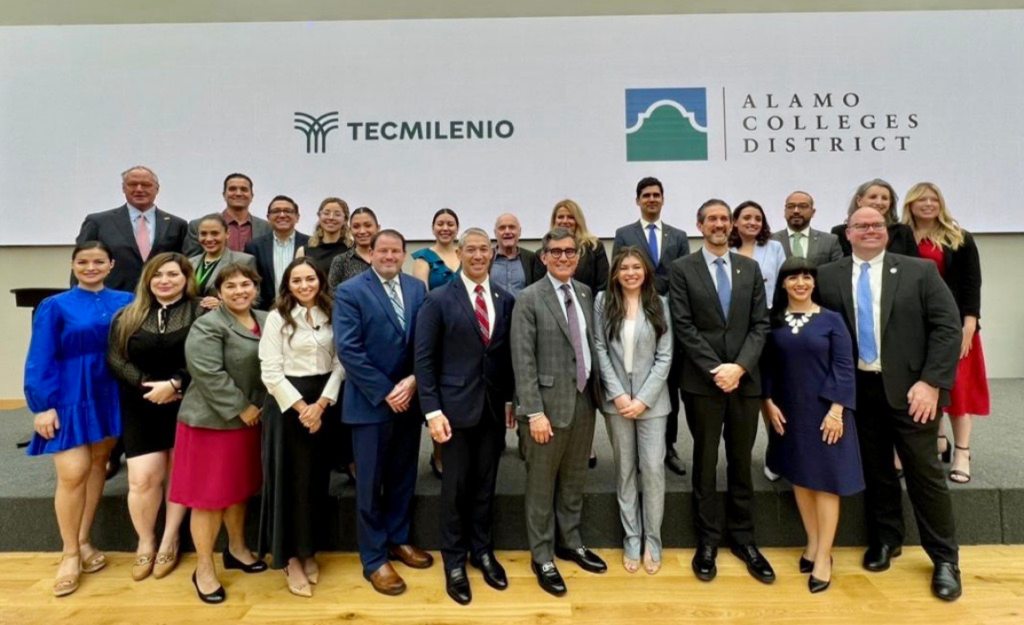
Also last year, Texas’s Alamo Colleges District received the Heiskell Award for Strategic Partnerships for its International Nursing Pathway, developed with the Methodist Healthcare System and Tecmilenio University. This workforce-driven initiative addresses nursing shortages by preparing internationally trained nurses to meet U.S. licensure and practice standards. By integrating global education, employer engagement, and clear employment pathways, the program exemplifies how international partnerships can respond directly to labor market needs.
Building Career Skills Through Global Learning
Community colleges are advancing the conversation around global learning and workforce readiness through the IIENetworker magazine. In the Spring 2025 issue, Career Skills at the Core, Jonah Kokodyaniak, IIE’s Executive Vice President of Program Development and Partner Services, interviewed President Jenny Varner of Davidson-Davie Community College about embedding global competencies across academic and workforce programs. The article highlights how international curricula, study abroad, virtual exchange, and employer partnerships work together to prepare students for careers in globally connected industries.
Earlier issues have further reinforced these themes, including the Fall 2023 article, It’s About Priorities: Internationalization in Community Colleges, which emphasizes aligning global engagement with workforce development, enrollment strategy, and civic responsibility.
New Partner Resource
IIE affiliates Community Colleges for International Development (CCID) and the Association of Community College Trustees (ACCT) have produced and will soon release Global Learning in Community Colleges, a free, publicly accessible resource to help community, technical, and vocational colleges advocate for the value of global education. The report provides data and talking points that colleges can use with students, families, leaders, policymakers, employers, and the media to highlight the vital role community colleges play in preparing learners for a globally connected world. Learn more.
As community-rooted institutions, community colleges are uniquely positioned to ensure that global learning and relevant international experiences are not add-ons but practical and integral dimensions to student success and career readiness. We look forward to continuing to build pathways where global learning fuels workforce readiness and opportunities for all students.
Related programs
IIE’s CEO, Jason Czyz, Convened an Expert Panel to Discuss the Role of International Education in Workforce Transformation
At the University of Illinois Urbana-Champaign—just two and a half hours outside of Chicago—something remarkable is happening: at any given time, hundreds of students and employers are collaborating to build solutions that meet disruption with innovation. Research Park was just one of the models that took center stage in IIE’s spotlight session, International Higher Education & Industry Partnerships: Shaping the Global Workforce, during the Association of International Education Administrators (AIEA) Annual Conference in Washington, D.C., February 17-19.
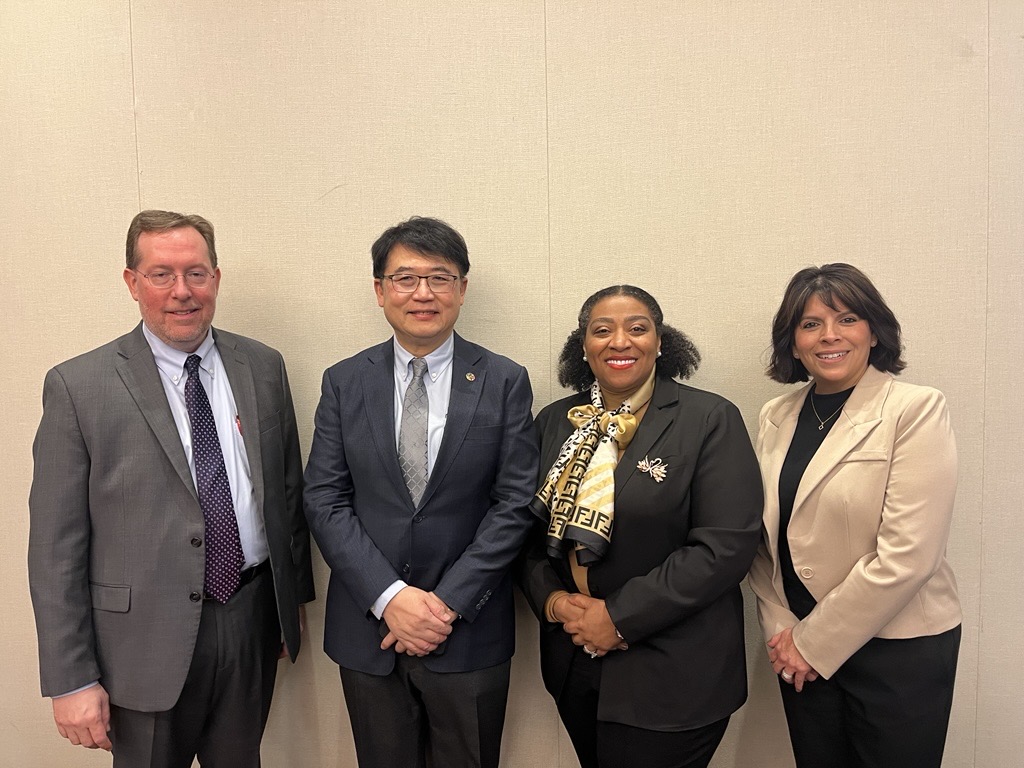
The expert panel included:
- Jason Czyz, President and CEO, Institute of International Education (IIE)
- Dr. Sammer Saleh Jones, Director for Global Relations, University of Illinois Urbana-Champaign
- Liz Lund, Senior Director, Philanthropy, the Medtronic Foundation
- Dr. Pornchai Mongkhonvanit, President, Siam University
The urgency behind these partnerships is clear. According to the World Economic Forum’s Future of Jobs reports, 65% of today’s primary school children will work in roles that don’t yet exist, and by 2030, 40% of workers’ skills will be obsolete or fundamentally transformed. In response, universities are partnering with employers to align academics, experiential learning, and research with the rapidly evolving needs of industries in the U.S. and abroad. Organizations like the Institute of International Education (IIE) help to design and implement programs that prepare learners for the future of work. IIE draws on its 107-year history of administering global scholarship programs, extensive university network, and evidence-based best practices.
Related Report: Integrating AI in Higher Education
Bringing together insights from seven countries—Qatar, Colombia, Ghana, India, Kazakhstan, Spain, and the United States—the experts at World Innovation Summit for Education (WISE) and IIE offer a nuanced look at how AI is reshaping higher education systems worldwide.
As an administrator of more than one hundred international exchange programs, higher education initiatives, and research studies, IIE tracks how universities, private sector companies, and governments invest in talent development across the globe. IIE’s CEO, Jason Czyz, led the discussion with leaders from business and higher education about the role of international education in workforce transformation. All agreed that deep collaboration between higher education and industry is essential. “We can’t predict exactly what the future of work will look like,” said Czyz. “But we can prepare students with versatile competencies that help them navigate ambiguity, adopt new technologies, and add value across industries.”
Key Themes from the Conversation
- Shared goals, shared investment, and shared infrastructure among partners amplify outcomes.
- A global mindset is, indeed, a critical skill—both for students who will need to navigate an ambiguous future of work, and the people who educate them.
- Work-integrated learning and applied research deepen the impact of global partnerships.
What Successful Partnerships Look Like
Each shared insights from their institutions’ most effective models:
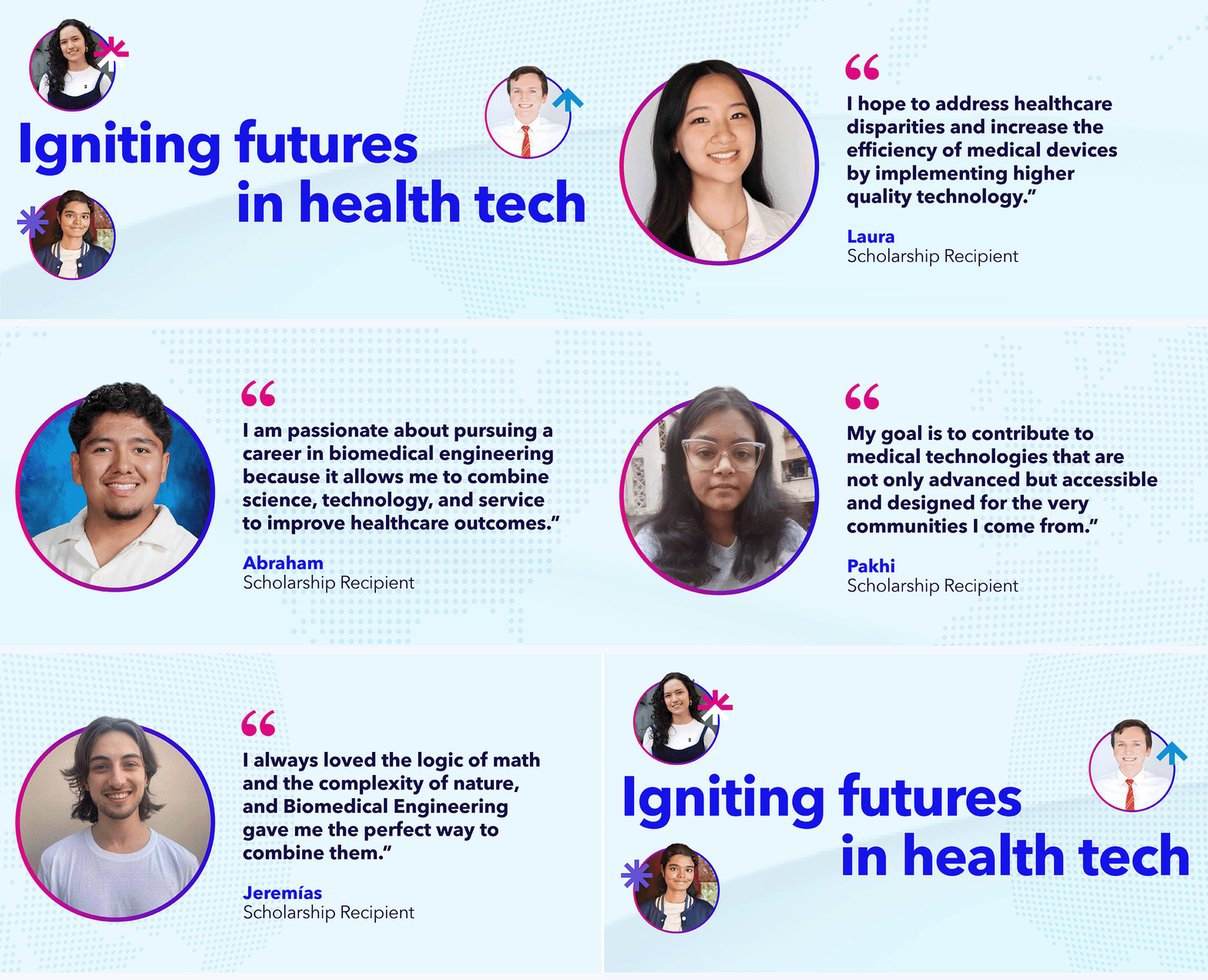
Medtronic Foundation: Liz Lund shared how Medtronic is demonstrating how businesses can lead with purpose and create opportunity at scale. Their ambitious initiative, Medtronic Spark, is a global 10-year commitment to propel 1 million students from low-income households into health tech careers. The Medtronic Spark Scholarship removes financial barriers for students pursuing degrees or credentials in health tech and related fields by providing financial assistance and access to support services. By opening doors to education, this scholarship empowers students to unlock their potential and shape the future of health. By working with IIE to offer the scholarship across 75+ countries and in 15 languages, the program has earned significant interest globally, raising awareness of the scholarship with more than 100,000 students and interested stakeholders worldwide!
University of Illinois Urbana-Champaign: Dr. Jones highlighted Research Park’s workforce ecosystem, built on interdisciplinary learning, experiential education, and strong industry engagement. With 120+ corporate partners, 2,000 employees, and 800+ student interns, the model produces measurable outcomes for students, employers, and regional industries. Stakeholders collaborate to advance R&D, develop new products, and incubate early‑stage ventures.
Siam University: Dr. Mongkhonvanit urged leaders to view education as the connective tissue linking research, innovation, and industry. He described Thailand’s involvement in the Higher Education and Research for Sustainable Development (HESD) initiative and other national efforts. “By building collaborative clustering systems—first nationally among institutions and industries leading the 10 most important research or innovation areas, then expanding internationally—mobility enables smoother research, innovation, internships, and capacity building.”
A Call to Action
All panelists agreed: the future global workforce will be shaped by institutions, industries, and governments that work together to build adaptive, mutually beneficial learning ecosystems. Strategic partnerships prepare graduates not only for jobs, but for lifelong learning in a world defined by rapid change.
Their message was clear—deepen collaboration, reduce barriers, and invest in shared infrastructure that supports learners worldwide. By embracing this model, higher education and industry can jointly cultivate the resilient, innovative, globally minded workforce that the future demands.
Learn more about how you can work with IIE.
related programs
IIE Connects Campuses Worldwide and Helps Countries Meet Global Talent Demand
Many countries increasingly view academic and professional exchanges as core to building skills, fostering innovation, and expanding their global influence. Educational exchange has been instrumental for governments seeking to foster bilateral cooperation, promote talent development, and raise economic competitiveness. These international education initiatives cultivate leaders while also contributing to long‑term national development, advancement across STEM fields, and other national priorities.
With targeted funding and in close cooperation, universities and governments can achieve multiple goals, including: 1) attracting high‑achieving students, particularly STEM, business, and language majors; 2) sending students to the United States to gain skills that contribute to national priorities; and 3) strengthening research collaboration and industry ties. The Institute of International Education (IIE) specializes in partnering with public and private sector organizations to design programs that advance these priorities, drawing on more than a century of expertise in scholarship program administration, a deep network of university connections around the world, and evidence‑based best practices. In addition to our long-standing work with premier international exchange programs such as Fulbright, we have partnered with esteemed global universities such as King Abdullah University of Science and Technology (KAUST) and NYU Abu Dhabi.
National Priorities and Student Demand in STEM Fields
Given the strong demand for STEM skills in today’s economy, it is important to understand the landscape of STEM education globally and within the United States.
There are an estimated 7 million globally mobile students worldwide pursuing higher education—a number that has nearly doubled over the last two decades. STEM disciplines now dominate global student mobility (Project Atlas, 2025), with a strong demand for STEM degrees as well as study or intern abroad programs that prepare students for the future of work.
U.S. institutions are responding to this demand according to the 2025 Open Doors Report on International Educational Exchange. More than half of international students come to the U.S. for its world-class STEM degree programs. And more than one‑quarter of Americans studying abroad are STEM majors, including engineering (6%), health professions (6%), math or computer science (4%), and physical or life sciences (8%). This alignment creates a strong opening for governments seeking to advance workforce development, innovation ecosystems, and public–private collaboration through targeted mobility programs that feed into these objectives.
How IIE Partners with Governments Worldwide
For governments interested in expanding educational exchange with the United States, IIE is a go-to partner for designing, implementing, and scaling education partnerships that deliver measurable outcomes.
Facilitating Strategic Partnerships
Through a structured curriculum, best-fit matching, and facilitated dialogues, IIE’s Center for International Partnerships connects U.S. and international institutions around defined national priorities such as digital transformation, advanced manufacturing, and health innovation.
Recent initiatives have involved R1 and regional public research universities, specialized technical colleges, community colleges, and private institutions, including:
- Thailand: 16 Thai and 11 U.S. universities are exploring agreements focused on STEM education and the digital economy, engaging public and private U.S. universities.
- Vietnam: 31 Vietnamese and 21 U.S. universities collaborated on engineering and semiconductor workforce development.
- India: Five Indian and 17 U.S. universities explored branch campuses, edtech, and industry-aligned higher education partnerships.
- Saudi Arabia: 80 Saudi and U.S. institutions participated in the inaugural Saudi-U.S. Higher Education Partnerships Forum to explore and strengthen educational collaboration.
Engineering and Experiential Learning
Study abroad among American engineering students has increased fivefold in 30 years, supported in part by IIE’s Global Engineering Education Exchange (Global E3) Consortium, which facilitates academic exchanges for engineering students between participating universities. Global E3 now includes nearly 70 top engineering schools across 69 countries.
IIE also delivers experiential learning programs that connect mobility to careers. Through initiatives like the Korea‑U.S. Special Exchange Program for STEM (KORUS), students gain direct exposure to research hubs, technology firms, and innovation ecosystems, strengthening long‑term talent and bilateral industry and research links.
Data-Driven Insights
IIE’s Research, Evaluation and Learning Unit offers a suite of services and products, including survey design, administration, and analysis; custom data; white papers and policy briefs; reports; and program evaluations. These evidence‑based insights enable governments to develop strategic engagement with U.S. institutions and strengthen national talent pipelines.
At IIE, we leverage our deep relationships with U.S. and global universities, expertise, and our international network of offices to design and deliver in-demand programming, resources, and services. Through the IIENetwork, for example, IIE convenes nearly 10,000 professionals from U.S. and international higher education institutions and organizations worldwide. We share best practices, host webinars and interactive discussions, and provide benefits such as first access to new data and student aid. Through this highly active, global network, IIENetwork members can stay on the cutting edge of higher education thought leadership and build relationships for fruitful collaboration.
In addition, IIE’s Generation Study Abroad resource hub is a collection of study abroad resources for students, families, and international education professionals. In our ongoing commitment to increasing the number of students participating in study abroad, we centralize the key study abroad research and publications to equip stakeholders. This includes Making the Case for Study Abroad, a quick reference for key data and talking points demonstrating the high-impact and value of study abroad for students and institutions linking IIE research and other source information to reinforce important outcomes such as gaining global knowledge and skills, improving academic degree outcomes, and preparing for the workforce.
Drive Impact with a Trusted Partner
The future of educational exchange will not be shaped by student interest alone. Targeted investment, evidence‑based strategy, and international partnerships are what will expand access and align mobility with national workforce and diplomatic goals.
For embassies and governments seeking to:
- Attract U.S. STEM talent,
- Deepen bilateral academic and research ties,
- Support regional development, or
- Build long‑term global talent pipelines,
IIE offers the scale, expertise, and trusted infrastructure to move from policy vision to measurable results—often within a single academic cycle. With the right partners, student mobility can become a cornerstone of national talent strategy and international engagement.